
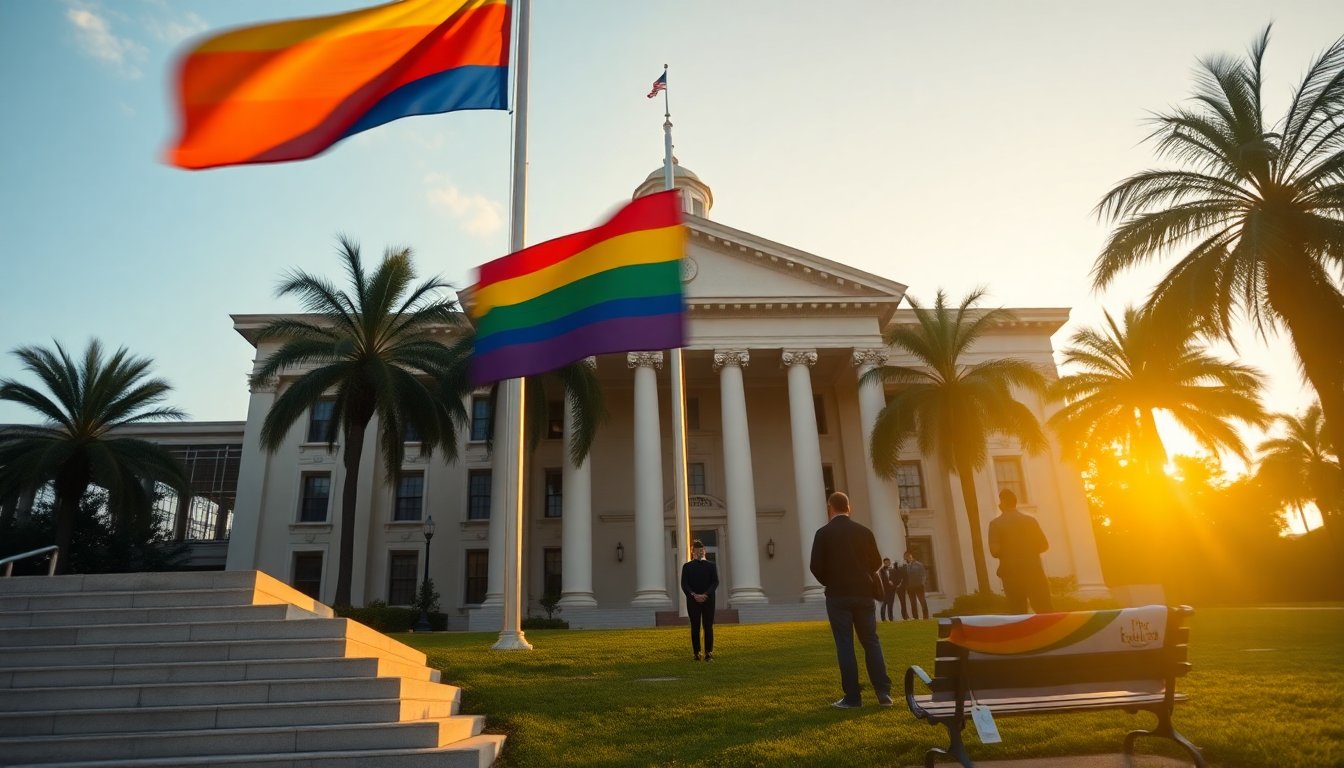
On 22 April, Florida governor Ron DeSantis signed SB 1134, a law that curtails local government involvement in diversity, equity, and inclusion initiatives and limits official support for Pride events. The statute explicitly stops counties, municipalities, contractors and grantees from using public money to promote or maintain DEI programs or offices, and it attaches official accountability to any failure to comply. This move adds to a pattern of statewide actions that reshape how public authorities can recognize and fund community-led diversity efforts.
The bill spells out who is covered and what enforcement looks like: local officials, municipal contractors and grant recipients are barred from spending public funds on specified activities, and breaches can be treated as misfeasance or malfeasance in office. Under the law, private citizens will have the right to pursue civil action against officials deemed to have violated the prohibition. The governor also used his social media platform to summarize the measure, reiterating that it prevents public entities from maintaining DEI offices or using resources to advance such programming.
Governor’s rationale and public reaction
At a signing event in Jacksonville, the governor framed DEI as an “ideological construct” and asserted it advances a particular political agenda that can harm certain groups. He singled out white men as what he described as a “disfavored group” under current DEI practices and claimed they had been discriminated against. Supporters of the bill argue it restores neutrality in government operations, while critics see it as a targeted restriction on how localities recognize and support diverse communities. The debate reflects broader national clashes over the role of identity-based programs in public institutions.
Voices from civil rights groups and state leaders
Civic organizations responded sharply. The Gainesville NAACP president, Evelyn Foxx, countered the governor’s characterization, saying his view is out of step with many Floridians and that broad assumptions about how groups feel are misleading. Equality Florida called the law “dangerous” and “vague by design,” warning that it is part of a wider effort that could chill local governments’ ability to celebrate and serve diverse populations. Meanwhile, Florida House Speaker Daniel Perez emphasized the measure does not categorically outlaw Pride gatherings but limits how governments may officially support them.
How the law translates on the ground
Already this year, state and local tensions have had visible effects on public displays. Municipalities were directed to remove or repaint rainbow crosswalks, a development that included the removal of a rainbow crosswalk in Miami Beach and the painting over of the rainbow memorial outside the Pulse nightclub in Orlando. In response, some cities sought creative alternatives: the city of St. Petersburg installed rainbow-themed bike racks as a way to maintain a visible civic acknowledgment of Pride. Mayor Ken Welch described the racks as “a vibrant way to honor the Pride street murals that were removed earlier this year due to state requirements.” These local decisions highlight the practical trade-offs municipalities face under the new law.
What the bill defines and the legal mechanics
The legislation includes a specific, operative description of DEI: it characterizes such efforts as attempts to “manipulate or otherwise influence the composition of employees with reference to race, color, sex, ethnicity, gender identity, or sexual orientation other than to ensure that hiring complies with state and federal antidiscrimination laws,” and it bans programs that would provide preferential treatment or special benefits. By setting that definition, lawmakers have aimed to restrict not only symbolic gestures but also training, recruitment programming and other workplace or contractor practices tied to diversity initiatives.
Broader context and possible next steps
SB 1134 joins a string of laws and executive actions in Florida addressing gender, sexuality and what some officials label “woke” policies. Governor DeSantis has previously clashed with corporate entities such as Disney over cultural and educational issues and has promoted Florida as a place where those viewpoints are being rolled back. The state has passed measures affecting restroom and locker room access in public settings and adopted policies concerning medical care for transgender youth. Legal challenges and civic pushback are likely to continue, as activists, local officials and civil rights organizations evaluate both courtroom strategies and alternative forms of public recognition.
The passage of the law leaves residents and municipal leaders navigating a narrow legal path: some will remove or alter official displays and programs, while others will pursue symbolic or private-sector responses. With the statute allowing individual civil suits and classifying violations as official misconduct, questions about enforcement, interpretation and the balance between state authority and local autonomy are expected to play out in the courts and in public debate in the months ahead.


