
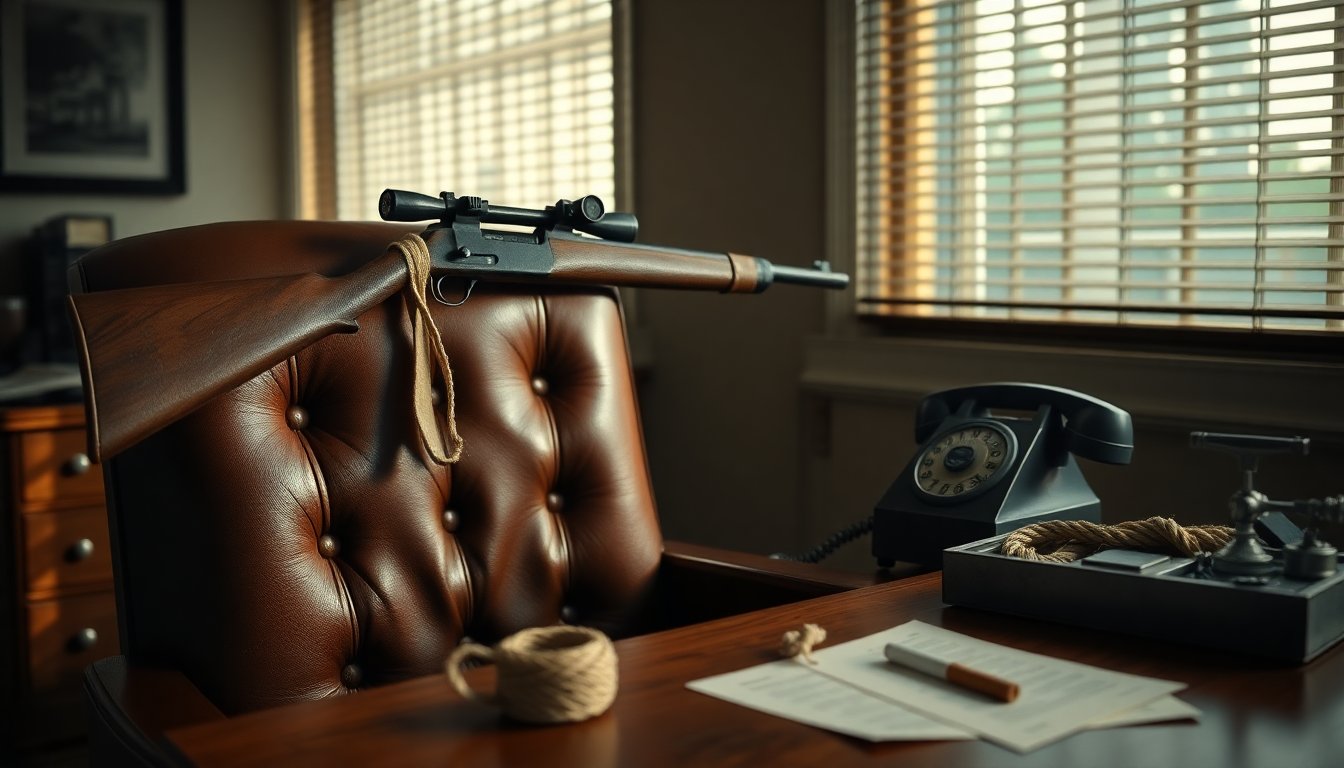
Gus Van Sant is back in theaters with Dead Man’s Wire (released as La Corde au cou in some markets), a compact, high-tension film drawn from a notorious real event. The story traces the 8 February 1977 Indianapolis case in which Tony Kiritsis bound a rifle’s barrel to the back of his broker’s head and wired the trigger to his own neck — a setup that kept the nation watching for 63 hours. Van Sant, known for his portraits of outsiders, returns to familiar territory: the collision of personal despair and public spectacle.
This new picture arrives amid ongoing debates about violence, inequality and how news becomes entertainment. Shot in a brisk schedule of nineteen days, the film foregrounds an intimate, filmic examination of a single, explosive episode while also interrogating the role of television and radio in turning private tragedy into a collective show. The movie stars Bill Skarsgård as the kidnapper and Dacre Montgomery as the captive son, with a notable turn by Colman Domingo as a radio host who helps shape the public conversation.
From headline to frame: the case that became a film
The real incident in Indianapolis is central to the film’s mechanics and moral questions. On 8 February 1977, Tony Kiritsis confronted his real-estate broker and, unable to pay his mortgage, executed an ingenious and terrifying device: the gun’s trigger connected to a wire looped at his own throat. That hostage rig is the film’s pivot — both the literal threat and the symbolic knot tying personal ruin to systemic failure. Van Sant does not hand the audience a verdict; instead, the camera lingers, forcing viewers to weigh whether Kiritsis is a criminal or a wronged man demanding redress.
Style, sound and political undertow
Visually, the film favors a desaturated palette with rust and green tones that suggest a world out of joint. Van Sant’s camera remains close and often uncomfortable: tight framing, off-kilter compositions and an editing rhythm that can feel abrupt. These choices mimic the fractured quality of broadcast news footage and situate the sequence of events as both intimate drama and televised event. The soundtrack leans on jazz, funk and R&B cues that create a counterpoint — a slippery, almost cheery rhythm against which the standoff reads as tragic and absurd.
Media as participant
Van Sant’s treatment insists that the media are not neutral witnesses. The film intercuts the claustrophobic tête-à-tête in the apartment with the outside commotion: police strategy, the newsroom’s calculation, and a captivated public. This interweaving emphasizes the notion of media spectacle — the way modern crises are produced and consumed. In that sense, the movie reads as a pamphlet on spectacle, showing how coverage can amplify despair and transform a desperate act into a national moment.
Echoes of earlier work
Many of the director’s signatures recur: an interest in social outcasts, the moral ambiguity of violence, and the willingness to leave questions open. Viewers familiar with My Own Private Idaho, Elephant, Will Hunting and Harvey Milk will recognize the same ethical preoccupations. Van Sant has argued that he seeks characters pushed to the margins; here, that focus translates into a portrait that refuses to sentimentalize or demonize, instead probing the social fault lines that produce someone like Kiritsis.
Production realities and cultural conversation
The movie’s short shoot and lean logistics speak to Van Sant’s longtime strategy of working within strict means: as he says, a camera and a story can go far. Yet he also notes the broader pressures on contemporary cinema: shrinking theatrical life, the rise of streaming and studios’ changing appetites. Those market shifts affect which stories get told and how audacious a project can be. In parallel, he situates the film within a political moment — referencing the return of Donald Trump to national prominence as a backdrop that sharpens themes of inequality and anger.
Queer cinema and influences
Alongside the new film, Van Sant reflects on the evolving queer landscape. He cites seminal works that shaped him — from Taxi zum Klo to the films of Derek Jarman — and notes contemporary phenomena that have broadened representation. Titles like Heated Rivalry and recent indie successes such as Pillion illustrate that queer stories can reach wider audiences, even as the industry changes.
Ultimately, Dead Man’s Wire is another installment in Van Sant’s long inquiry into how individuals collide with systems. It is a compact, unnerving film that uses one historical case to ask larger questions about justice, media and the limits of resistance — and to remind viewers that cinema can still force us to look closely at the lives we tend to ignore.


