
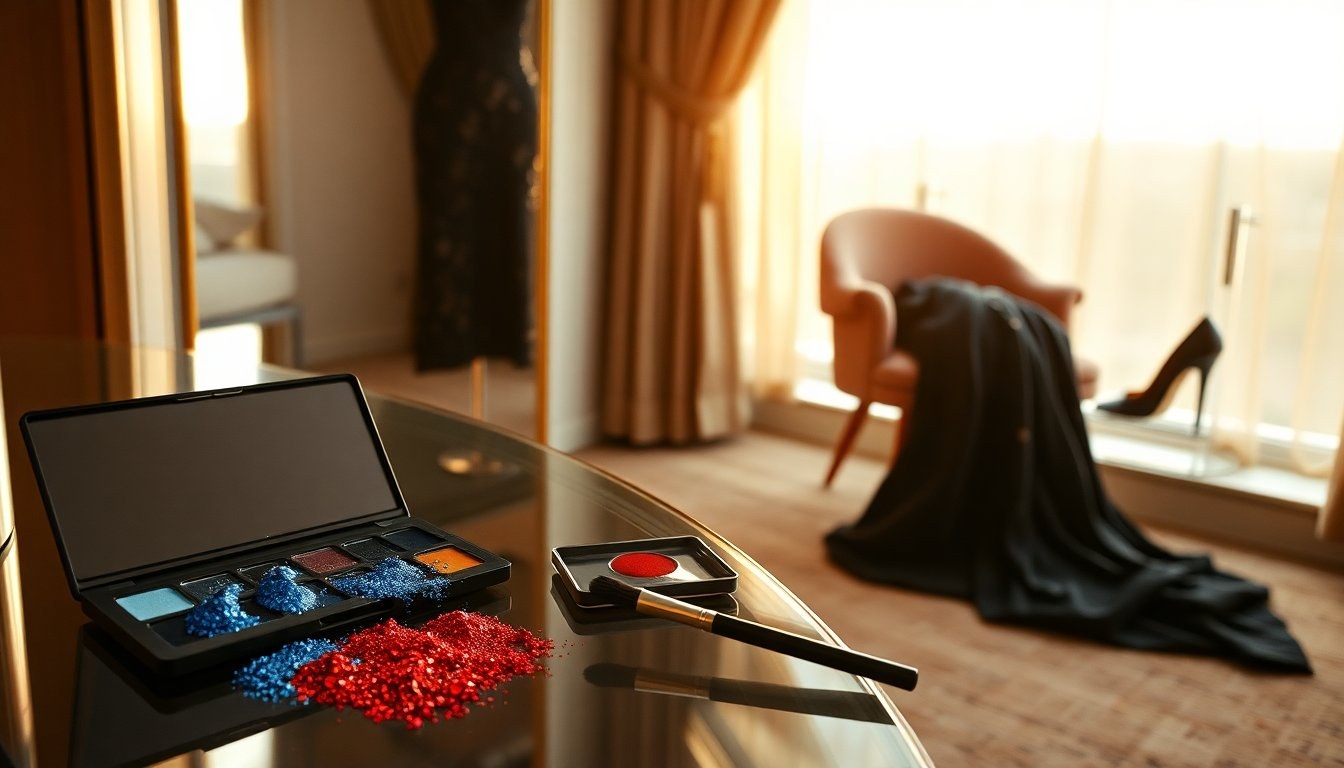
The spotlight at the event fell not only on the outfit but also on the face that accompanied it. On his debut at the Met Gala, Hudson Williams arrived in a custom Balenciaga ensemble while wearing a deliberately theatrical makeup scheme that referenced the film Black Swan. The application used contrasting tones—a shimmering blue on one eye and a sparkling red on the other—combined with intentionally smudged, winged liner to create an asymmetrical, cinematic effect. The creative team described the concept as a study in transformation, a visual nod to the duality of innocence and darkness found in the movie.
The inspiration and creative intent
The team behind the look explained that the makeup was meant to evoke a narrative rather than conventional glamour. Hair and makeup collaborator Aika Danica Flores framed the design as an interpretation of the white swan to black swan metamorphosis: a deliberate fraying of softness into something sharper and more confrontational. Sources at the venue indicated that the choice of color and texture was intended to complement the tailoring of Balenciaga while honoring cinematic references. The approach prioritized expressive storytelling through beauty, leaning into contrast, texture, and intentional imperfection to communicate a transformation rather than an impeccable finish.
Design details and execution
Technically, the makeup showcased contrasting palettes on each eye with glittered pigments and heavy liner that was softened in places for a lived-in look. The creative brief asked for asymmetry—one eye rendered in cool blue shimmer, the other in warm red sparkle—so the face itself told a story. The application included intentionally smudged wings and some fallout to suggest movement and metamorphosis. While some observers praised the theatricality and artistry, others reacted negatively to the rough edges, interpreting them as sloppy rather than purposeful. The tension between intent and reception is central to how avant-garde beauty is received on large public stages.
Online reaction and the artist’s response
The public response on social platforms split quickly between admiration and criticism. Supporters reposted images and videos, often noting that they planned to recreate the look, while detractors left harsh remarks about execution and symmetry. In the face of personal attacks, Aika Danica Flores addressed the conversation directly on Threads, describing the evening as a career milestone carried out under intense pressure. She acknowledged feedback as part of growth, reiterated that taking creative risks can invite controversy, and asked followers to remember the human behind the work. Her closing sentiment reminded readers that kindness costs nothing and urged people to treat creators with basic respect.
Peer support and fan reactions
Colleagues and fans quickly rallied to Flores’ side, celebrating both the concept and the courage to experiment at a high-profile event. Other beauty professionals commented that high-pressure moments often involve quiet panic and improvisation, and many praised the outcome as a memorable, conversation-starting moment in celebrity makeup. Several fans posted images of their own interpretations, testifying to the look’s influence despite mixed reviews. The outpouring of support emphasized a communal respect for risk-taking in creative fields and reinforced the idea that public backlash can coexist with genuine admiration.
What the exchange reveals about fashion, art and critique
This episode highlights longstanding tensions between artistic intent and public expectation in fashion and beauty. When a team chooses an expressive, narrative-driven approach—especially one that leans into asymmetry and deliberate roughness—the result will inevitably polarize viewers. The incident also underscores the emotional labor of practitioners in the industry: artists operate under deadlines, visibility, and high stakes, yet they remain vulnerable to anonymous critique. As the conversation continues, some industry observers suggest viewing such moments as opportunities to discuss the role of experimentation in mainstream settings and to remind audiences about the human element behind every creative decision.
Final note
Whether remembered for controversy or influence, the look propelled conversations around the Met Gala, celebrity presentation, and the boundaries of beauty. It illustrates how a single, intentionally disruptive choice can create ripple effects across social media, professional communities, and fan culture. For many, the debate offered a prompt to balance critique with compassion and to acknowledge the transformative ambitions that often drive high-profile fashion and beauty moments.


