
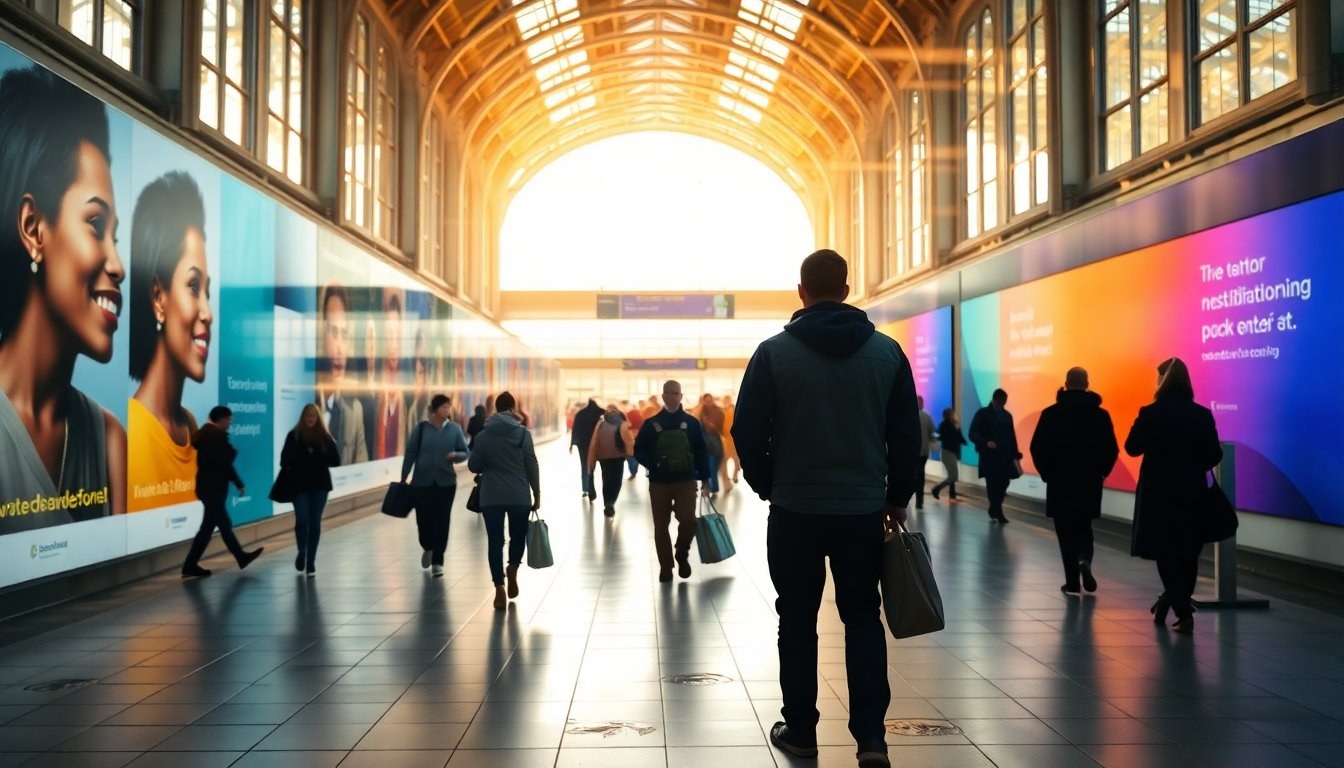
The third edition of Trans+ History Week returns from 4-10 May with a national visibility push titled Reflections. Across major transport hubs, shopping centres and public squares the campaign places striking images and short lines designed to remind people that trans+, non-binary and intersex histories are long-standing and present in everyday life. Locations include Liverpool Central Station, Manchester’s Hotel Football, Brighton’s Churchill Square, Newcastle Haymarket, London’s Boxpark Wembley and Edinburgh Towers, bringing the week’s message into public circulation and conversation.
This national effort is timed amid heated debate in the media and politics, and follows a period in which many in the community report harm from coverage: surveys indicate that 99% of trans+ people say UK reporting on trans+ matters has damaged their mental health. Organisers describe Reflections as a platform to centre lived experience, resilience and contribution rather than controversy. The campaign combines bold visual language with succinct slogans such as “In the reflections of the past, we see our strength” to emphasise continuity and presence.
Public campaign and visual messages
The Reflections campaign is deliberately visible, using high-traffic display sites to introduce brief, resonant statements and portraits that invite curiosity and recognition. Art and copy work together to make historical presence tangible in everyday settings: commuters, shoppers and passers-by encounter messages intended to challenge erasure and prompt thought. The organisers say the combination of placed advertising and communal storytelling aims to shift attention from polarised headlines to a quieter, persistent record of lives and achievements across generations.
Creative commissions, resources and live programming
Beyond outdoor visuals, Trans+ History Week has commissioned 21 trans+ creatives to produce original short pieces—writing, illustration and other formats—that will be shared throughout the week in partnership with QueerAF. The initiative runs alongside the project’s third annual workbook, a learning and reflection resource intended for schools, groups and individuals seeking accessible ways to explore trans+ history. Together these outputs create both digital and tangible entry points for learning and celebration.
Flagship London events and how to take part
In-person occasions anchor the programme in London. On 6 May—marked as Trans+ History Day—there is a live recording of the QueerAF podcast, hosted by Lars Fellows (known from I Kissed A Boy), featuring guests including reality TV alumni Nadia Almada and Zelah Glasson. That same day a panel will explore storytelling with contributors such as Ki Griffin, Rebecca Jane Morgan, HRH Aphrodite I and Alexandra Parmar-Yee. On 8 May an all-trans+ comedy night and fundraiser features performers including Don One and Alex Franklin. Tickets for these events are available via Outsavvy, and the week’s programme is listed on transhistoryweek.com.
Political backdrop and public support
The week takes place while debates about legal guidance and public policy continue to intersect with media narratives. Organisers note that the campaign arrives just weeks before MPs are due to examine the EHRC’s revised Code of Practice—a response to the UK Supreme Court ruling in For Women Scotland v The Scottish Ministers—and against a broader climate of politicisation affecting everyday lives. Parliamentary backing has been evident in previous years: in 2026, 69 MPs supported an Early Day Motion welcoming Trans+ History Week, tabled by Labour MP Kate Osborne, who highlighted the importance of recognising the long-standing existence and contributions of trans+ people as part of the case for dignity and justice.
For those seeking to engage, the campaign offers multiple routes: view the outdoor displays, access published creative commissions, use the workbook for learning, or attend the London gatherings. Media outlets and readers are also encouraged to support queer media by backing long-established outlets such as DIVA, now published by the DIVA Charitable Trust. Details about the trust and ways to support its work are available at divacharitabletrust.com, and further links relating to community media appear on the magazine’s social platforms.
In sum, Trans+ History Week combines public art, commissioned work and live events to reclaim narrative space and offer educational tools. The Reflections campaign invites the public to see trans+ lives as woven into shared history and encourages participation, learning and solidarity at a time when cultural visibility and political processes are closely entwined.


