
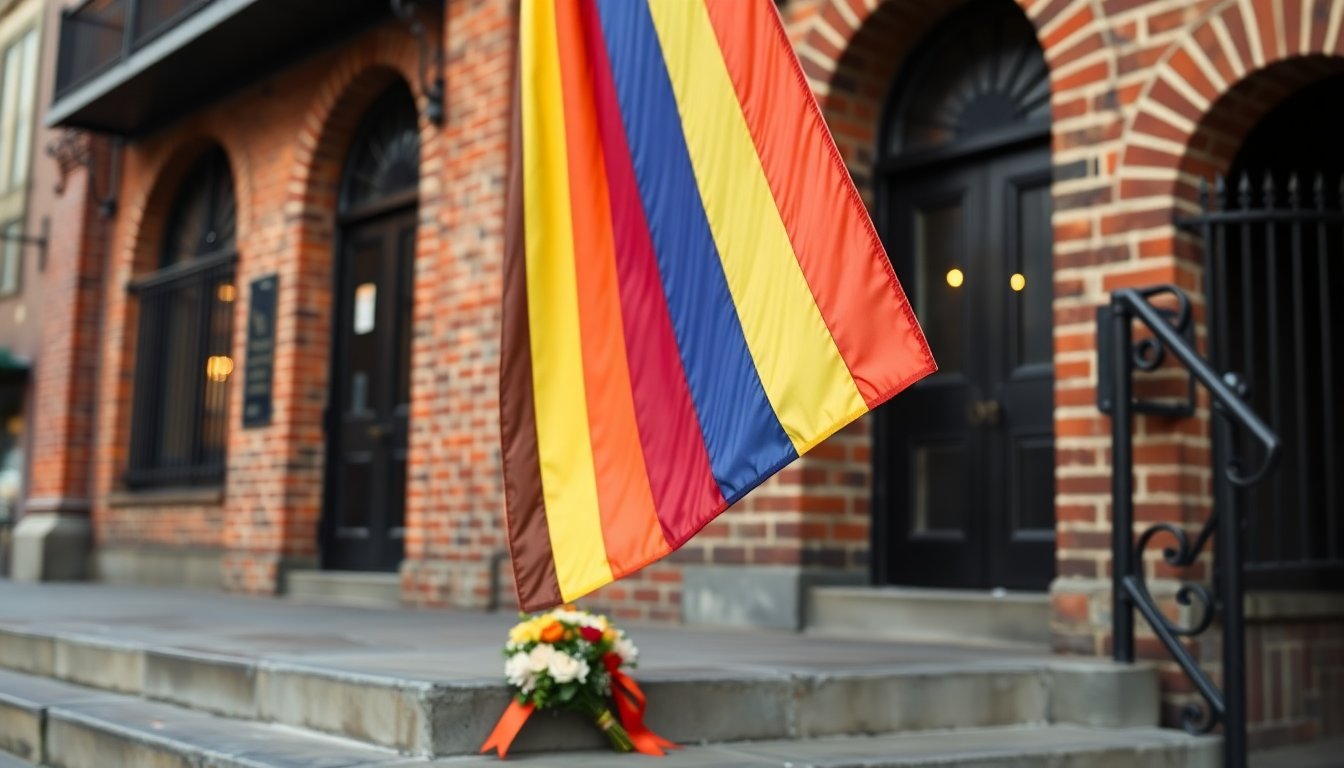
The Pride flag has been restored to the Stonewall site in Manhattan after a legal dispute and a formal agreement with the U.S. authorities. The decision announced on April 13, 2026 ends a contentious episode that began when a National Park Service memo led to the banner’s removal in February. Advocates argued the flag is not merely decorative but is tied to the site’s deep historical meaning, and that point became central to the challenge. The reinstatement was framed as a permanent resolution, with the agreement confirming that flying the rainbow flag at the location complies with applicable law and agency policy.
The site in question is the Stonewall National Monument, which commemorates the 1969 gatherings that catalyzed the contemporary LGBT+ rights movement. The monument was designated in June 2016 and has since been an emblem of activism and remembrance. Removing the banner provoked immediate backlash from community groups, local officials, and national organizations. Protesters responded by re-hanging flags in the neighborhood and staging demonstrations, underscoring how visible emblems like the rainbow banner serve as both a symbol of identity and a marker of a specific historic narrative.
Legal challenge and settlement
A law firm representing community interests filed suit to contest the removal, arguing that the banner’s display falls within permissible exceptions to the general rule limiting flags at federal sites. The challengers emphasized that the presence of the rainbow flag at Stonewall is supported by the historical context of the place itself and by precedents allowing non-federal emblems where they illuminate a site’s significance. After negotiations, the parties reached an amicable settlement that allows for the Pride flag to be reinstalled “permanently,” language that the plaintiffs celebrated because it affirms the banner’s legal standing and institutional acceptance under current National Park Service policy.
Argument from the plaintiffs
The group behind the suit maintained that the flag’s removal amounted to an erasure of memory, and that federal policy must account for symbols that are intrinsic to a site’s story. Their legal rationale relied on an interpretation of agency guidelines that permit exceptions for non-official flags when they are warranted by the site’s mission or history. By securing language in the settlement that the flag “conforms to law and National Park Service policy,” the plaintiffs secured a practical and symbolic victory: not only is the banner back, but its presence is formally recognized as appropriate for Stonewall.
Why Stonewall matters
The Stonewall location in Greenwich Village is widely seen as the birthplace of the modern LGBT+ rights movement because of the resistance that followed a police raid at the Stonewall Inn in 1969. That uprising galvanized ongoing activism, annual commemorations, and the worldwide Pride movement. Maintaining visible markers at such sites is more than ceremonial; it contributes to public memory and civic education. The reinstated Pride flag now stands as an explicit acknowledgment that the struggles and victories tied to Stonewall remain part of the national story.
Symbols and public memory
Flags and plaques function as tools of remembrance: they help visitors and residents connect textual histories to tangible places. In this case, the rainbow banner was characterized by supporters as an essential interpretive element that reinforces the monument’s purpose. Removing it risked diminishing the site’s capacity to convey the specific narratives of marginalized communities. The settlement therefore restores not just a piece of fabric but a layer of meaning that aids in teaching future generations about the events and people who shaped LGBT+ rights.
Responses and wider implications
The reversal generated relief and vindication among activists and elected officials who publicly criticized the removal. Local leaders and national advocacy groups framed the outcome as a reaffirmation of visibility for LGBT+ communities. At the same time, the episode emerged against a backdrop of policy shifts from the current White House that critics say have rolled back certain protections for transgender people and limited other advances in LGBT+ rights. Observers see the settlement as a localized legal win that also highlights the continuing national debate over recognition, symbols, and access to public space.
Ultimately, the return of the Pride flag to Stonewall represents both a concrete change at a single site and a broader commentary on how governments balance uniform rules with the need to honor distinctive histories. The agreement reached in April clarifies the legal footing for symbolic displays at historically significant places and underscores the role of litigation and public pressure in shaping which narratives are held in the nation’s public memory. For many, the restored banner is a reminder that civic spaces can reflect the diverse stories that constitute a shared past.


