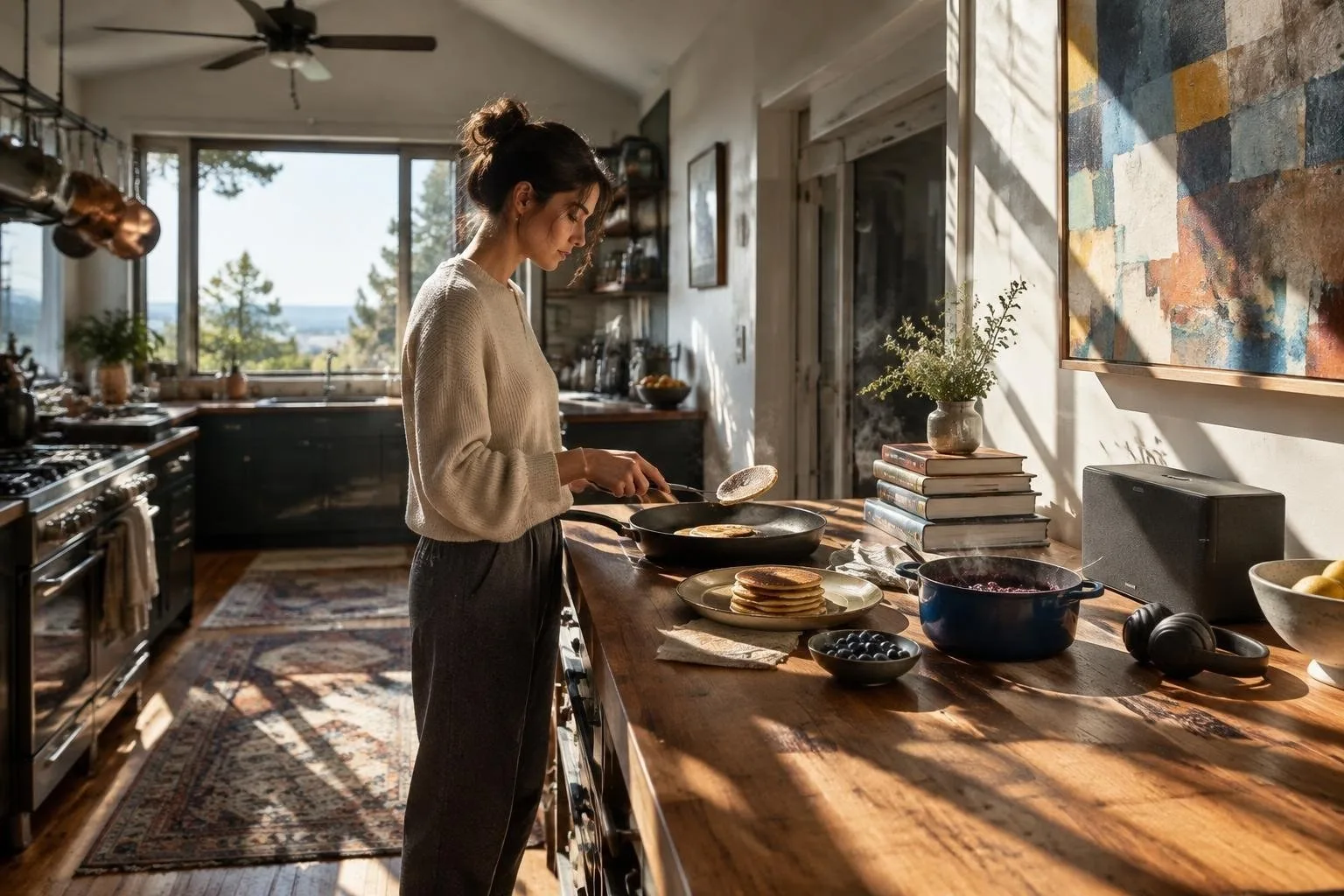
When I refreshed my dating profile with a blunt line—”Looking for something casual as I’m recently separated”—my queer circle burst into laughter. Their reaction was half-amusement, half-resignation: the idea of a woman seeking uncomplicated sex seemed, to them, a contradiction. My first match on a popular app wanted the same low-stakes arrangement, yet we spent hours curating playlists for each other before we ever met. After a night together, we cooked pancakes, streamed CMAT’s Tiny Desk, and cried on my couch. The experience felt anything but the detached encounter my friends expected, prompting the familiar sigh: “Classic lesbians.”
Personal stories expose a hidden script
Across a handful of candid interviews, a pattern emerges. Daisy, a 37-year-old vocalist who asked to stay anonymous, insists that sapphic women do crave casual sexual encounters just as often as straight people. She notes, however, that the route to those encounters often runs through “uncasual” moments—dinners, wine, and conversation—rather than the rapid-fire messaging typical of many hookup apps. Tilly, a 29-year-old pan-sexual customer-service manager, echoes the frustration: when she wants a no-strings-attached night with a woman, the options feel limited, pushing her toward men who more readily accommodate brief, emotion-free encounters. The disparity is not a lack of desire; it is a mismatch between expectation and the social choreography that seems to surround sapphic interactions.
Research contradicts the “U-haul” myth
Two peer-reviewed studies—one from 1994 and another from 2004—provide a statistical backbone to these anecdotes. Both investigations report that queer women express a desire for casual sex at rates comparable to heterosexual men and women. The findings dismantle the long-standing stereotype of the “U-haul lesbian,” a caricature that assumes lesbian couples are inherently bound for long-term, cohabiting arrangements and that they lack the capacity for brief, purely physical connections. While the data do not capture the nuances of every individual’s experience, they do demonstrate that the myth is not grounded in measurable behaviour.
Rethinking “casual” within queer relationships
Sex therapist Gigi Engle, author of *Kink Curious*, points out that the problem lies less with sapphic people and more with the cultural script that defines “casual” as synonymous with emotional detachment. That script originates from heteronormative narratives, where masculinity and femininity prescribe distinct roles: men as pursuers of physical gratification, women as custodians of emotional intimacy. In queer spaces, those gendered expectations are softened, allowing for a broader palette of relational formats. Engle argues that sapphic couples can negotiate intimacy on their own terms, without feeling pressured to “play it cool” or to hide burgeoning feelings.
For Bethany, a 35-year-old talent-management entrepreneur, the line between casual and serious becomes especially blurry when one partner faces personal hardship. She describes a current liaison that began as a no-strings arrangement but has evolved into something emotionally invested as she checks in on her partner’s wellbeing during a rough patch. Bethany questions why casual sex must be unemotional by definition, suggesting that the very notion may be a cultural artifact rather than an innate requirement.
These narratives reveal a common thread: the desire for a straightforward, low-commitment encounter often collides with the human impulse to nurture connection once vulnerability is introduced. The “U-haul” label, then, functions less as an accurate descriptor and more as a shorthand for the bewilderment many feel when a supposedly casual encounter spirals into something deeper.
Understanding this dynamic invites a shift in how we talk about sapphic dating. Rather than insisting that casual must equal detached, communities can embrace a more fluid definition—one that permits moments of affection, shared playlists, or even a post-hookup conversation without jeopardising the original intent of a low-pressure meeting. Such a reframing could reduce the stigma attached to queer women seeking brief intimacy and open space for honest communication about boundaries.
Ultimately, the evidence from both personal testimony and academic research suggests that the “U-haul lesbian” stereotype is an oversimplification. Women who love women are capable of both fleeting encounters and lasting partnerships; the key is allowing each relationship to define its own terms, free from the weight of outdated expectations.