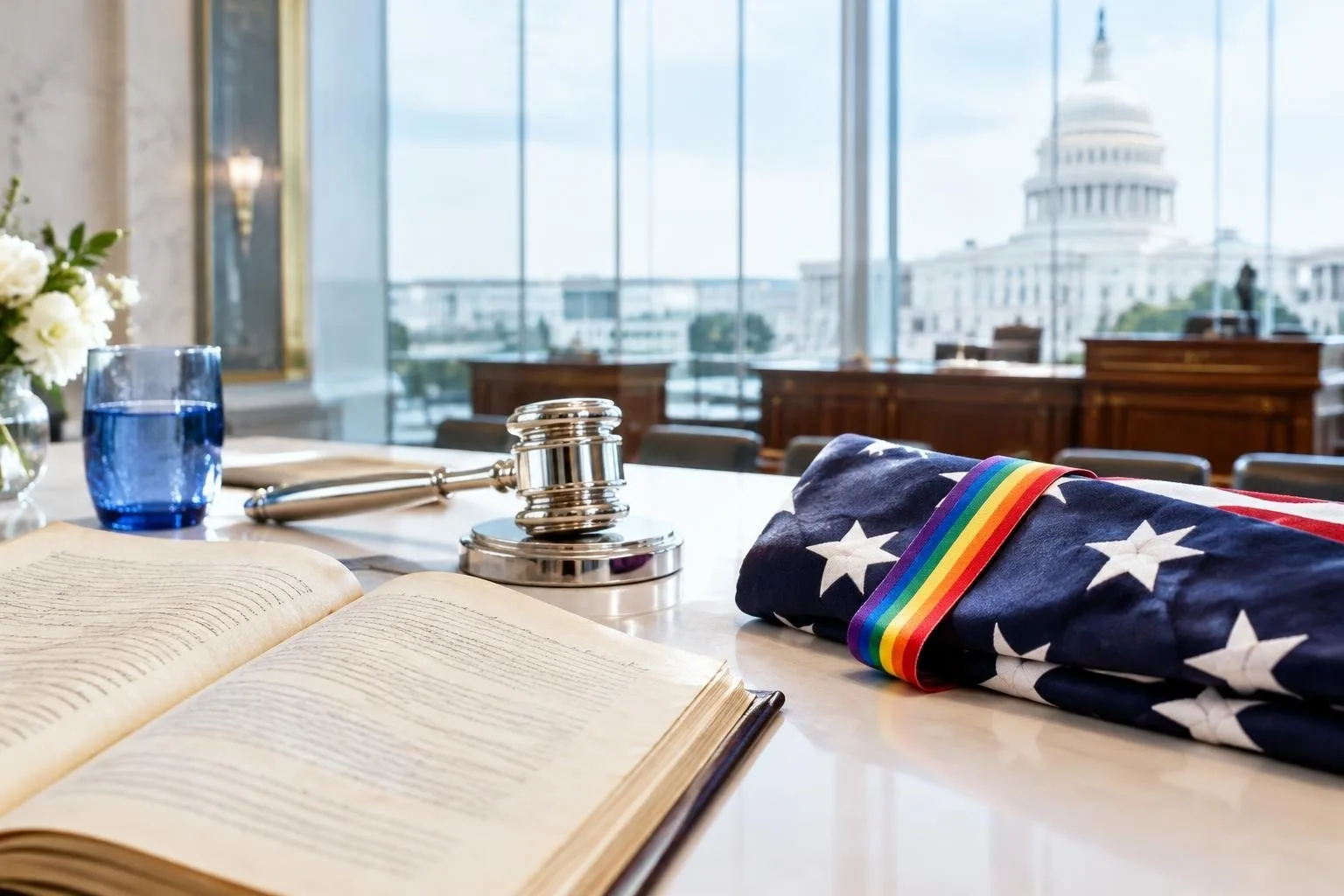
The 2026 United States midterm election proved to be more than a routine partisan contest. Voters in both traditionally red and blue districts delivered a clear message: representation matters. Across the country, a record number of openly LGBTQ candidates not only appeared on the ballot but walked away with victories that rewrite the political playbook.
These outcomes arrived against a backdrop of intense campaigning, costly ads targeting transgender issues, and a national conversation about gender-affirming care. Yet the electorate repeatedly rejected candidates who used LGBTQ identities as a wedge, opting instead for candidates who championed inclusion. The resulting “rainbow wave” reshaped Congress, state legislatures, and even the Senate composition.
Senate breakthroughs: first openly gay man in the upper chamber
New Hampshire delivered the most striking milestone when Chris Pappas secured the state’s Class III Senate seat. Pappas became the first openly gay man elected to the U.S. Senate, defeating former Republican Senator John Sununu by a decisive margin that hovered around 60 % to 37 % as the final count was tallied. In his acceptance remarks, Pappas thanked his husband, Vann Bentley, highlighting the personal significance of the win for LGBTQ families nationwide. The victory not only adds a new voice to the Senate’s progressive bloc but also signals that openly gay candidates can succeed even in swing states.
House and state victories: a cascade of firsts
In the House of Representatives, several groundbreaking candidates secured re-election or flipped seats. Sarah McBride of Delaware, the nation’s first openly transgender congresswoman, won a comfortable second term despite earlier attempts by Republican colleagues to limit her bathroom access in the Capitol. Meanwhile, Indiana’s JD Ford unseated incumbent Republican Victoria Spartz, becoming the first openly gay member of Congress from the Hoosier State and the first Democrat to hold that district since 1990.
The South saw historic gains as well. In Georgia, Bentley Hudgins captured House District 90, becoming the Deep South’s first openly transgender and nonbinary state legislator. Their victory over Republican Samantha Boston underscored a shifting electorate in a region long resistant to LGBTQ representation. In Kansas, lesbian Representative Sharice Davids secured a fifth term, reinforcing her status as one of the first Native American women and the first openly LGBTQ member from that state.
Other notable wins include New York’s Ritchie Torres, the first openly gay Afro-Latino congressman, who earned a fourth term; Pennsylvania’s Malcolm Kenyatta, the first openly gay Black state legislator, who clinched a fifth term; and Michigan’s Jeremy Moss, who became the state’s first openly LGBTQ member of Congress after a long career championing civil-rights legislation at the state level.
Statehouses also welcomed new nonbinary and transgender voices. Delaware’s DeShanna Neal ran unopposed and kept the seat as the state’s first nonbinary representative. Wisconsin elected Dina Martinez-Rutherford as its inaugural openly transgender assembly member, pledging to expand the state’s nondiscrimination statutes to cover gender identity and expression.
Policy ripple effects: what the rainbow wave could mean for LGBTQ rights
The electoral surge carries tangible implications for legislation. With dozens of newly elected queer officials occupying key swing districts, bills aimed at protecting gender-affirming care, expanding nondiscrimination protections, and safeguarding LGBTQ youth in schools face a more favorable legislative environment. In Texas, the defeat of hard-line candidates like former Attorney General Ken Paxton—who pledged to “defeat the radical transgender movement”—means that proposed anti-trans measures will encounter stronger resistance.
At the federal level, Senators who embraced LGBTQ equity, such as newly-elected Abdul El-Sayed (the first Muslim senator), have pledged to restore funding for HIV prevention and oppose lawsuits that target gender-affirming providers. Their presence in the Senate, combined with the new Democratic majority, promises to counterbalance previously dominant anti-LGBTQ agendas.
State executives also feel the shift. In Texas, Democratic Governor-elect Gina Hinojosa—the first Democrat to win the governorship since 1990—has signaled openness to revisiting the state’s ban on gender-affirming care for minors, a policy that had been staunchly defended by the outgoing administration. While her specific health-policy platform remains under development, her victory alone disrupts a decades-long Republican hold on statewide offices, opening doors for future inclusive reforms.
Overall, the 2026 midterms demonstrate that LGBTQ candidates are no longer electoral anomalies. Their success across the political spectrum suggests a growing voter willingness to elect leaders based on policy competence rather than identity politics. As these officials take office, the legislative landscape is poised for a period of heightened advocacy, potentially accelerating the passage of protections that have long been stalled in hostile chambers.