
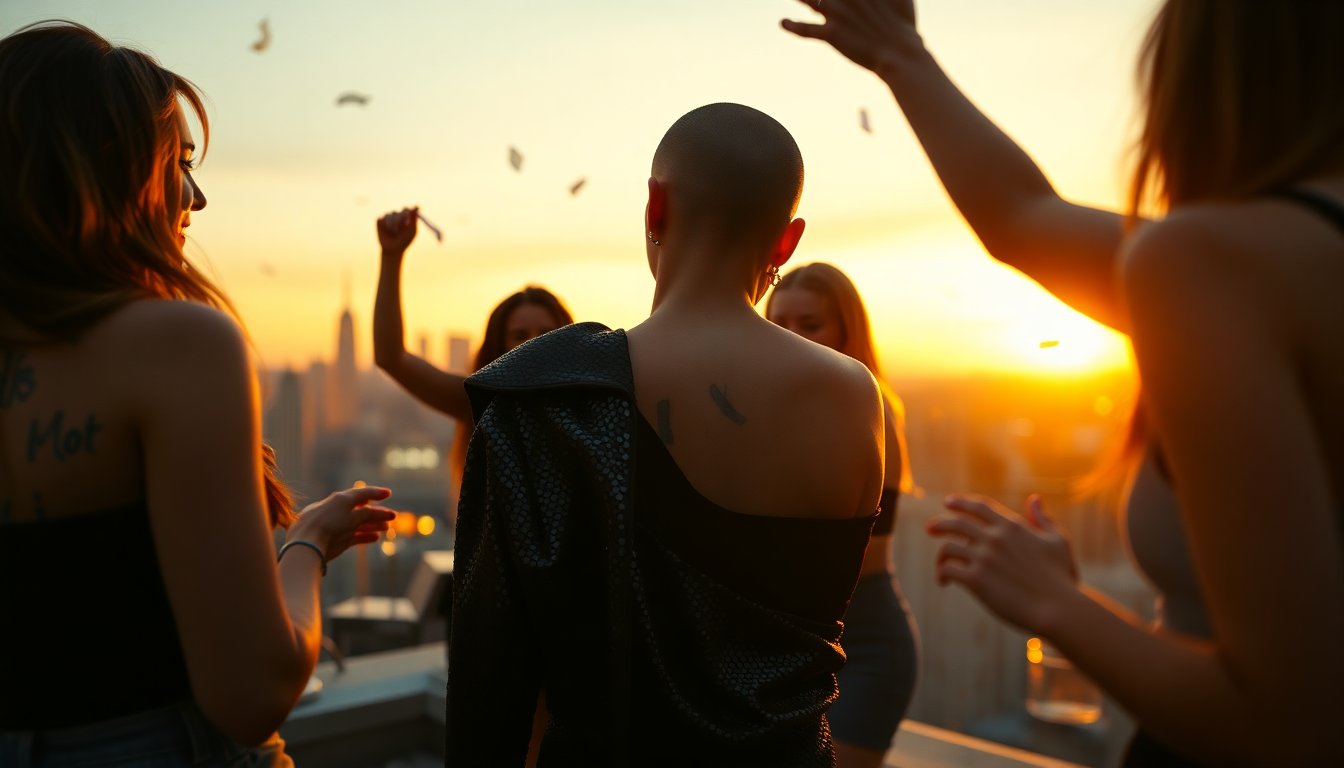
The career of Britney Spears has always been more than a sequence of hit singles and staged looks; it has functioned as a mirror for people whose identities were policed by society. From the shockwaves of the 2003 VMA kiss with Madonna to the widely publicised 2007 head-shaving episode, her life in public has contained flashes of vulnerability, defiance, and reinvention. For many queer women, these moments felt less like celebrity spectacle and more like a reflection of struggles around autonomy, sexuality and visibility.
Across the late 1990s and early 2000s, Britney’s public persona—often labeled the pop princess—coexisted with a consistent willingness to embrace and perform for LGBTQIA+ audiences. While mainstream headlines often focused on male fans or sensationalised controversies, a quieter pattern emerged: Britney cultivated a space of welcome for women who loved women. Her concerts, videos and gestures signalled inclusion at a time when queer relationships were rarely presented with nuance on large platforms.
A public life and private struggle
Being in the spotlight exposed Britney to intense scrutiny about every personal choice, especially as she began to express more overt sexuality and agency. The media narrative shifted repeatedly—from wholesome teen idol to a figure blamed for perceived moral decline—illustrating how women’s bodies and choices are often policed. When Britney publicly struggled, many women who had felt their own voices diminished recognised a shared pattern of being judged and controlled. The #FreeBritney movement later crystallised that connection, transforming fandom into advocacy and putting conservatorship and autonomy into public conversation.
Why queer women connect with her
There are several overlapping reasons why Britney became meaningful to many women who love women. First, her stagecraft and aesthetics—sequences of choreography, camp, and glamour—resonated with a culture that values performance as a form of identity expression. Second, her visible alliances and club performances signalled solidarity rather than performative nods. Third, moments such as the 2003 onstage kiss with Madonna, staged for shock on live television, nevertheless operated as public validation for non-heteronormative desire at a time when such validation was rare.
Visibility and validation
Visibility matters, especially when mainstream media offers few respectful portrayals of same-sex attraction. When a megastar leaned in for a kiss on a global stage, it created a moment of recognition for audiences who saw their lives misrepresented or erased. That recognition is powerful: it isn’t just spectacle, it’s a form of cultural permission. For many sapphic women, Britney’s stage gestures and inclusive language during shows functioned as small but meaningful acknowledgments of their existence.
Solidarity through action
Beyond gestures, Britney acted in ways that demonstrated ongoing support: performing in gay venues, participating in projects with queer visibility, and creating moments within her art that welcomed LGBTQIA+ fans. These choices mattered because they moved beyond words to visible, repeated acts of solidarity. As her public image came under attack, the queer community often became a refuge where judgement was softer and acceptance was more consistent—therefore strengthening the bond between artist and audience.
Legacy and the role of queer media
Britney’s journey models resistance to external control—whether from tabloid culture, legal structures, or patriarchal expectations. That model resonates for queer women who navigate similar pressures in different forms. Independent outlets and queer-focused media have long covered that relationship, and publications such as DIVA have dedicated decades to spotlighting content by and for LGBTQIA+ women and gender-diverse people. The magazine’s shift to operate as a charitable trust underlines how community media helps sustain spaces of representation and advocacy for future generations.
In sum, the connection between Britney Spears and many queer women is built on a mixture of performance, advocacy, and shared experiences of being policed. Her public ups and downs created moments of recognition and solidarity that went beyond fandom, turning music and spectacle into touchstones for broader conversations about agency and belonging. For those who found refuge in her work, Britney’s story continues to offer both a mirror and a model for survival and self-determination.


