
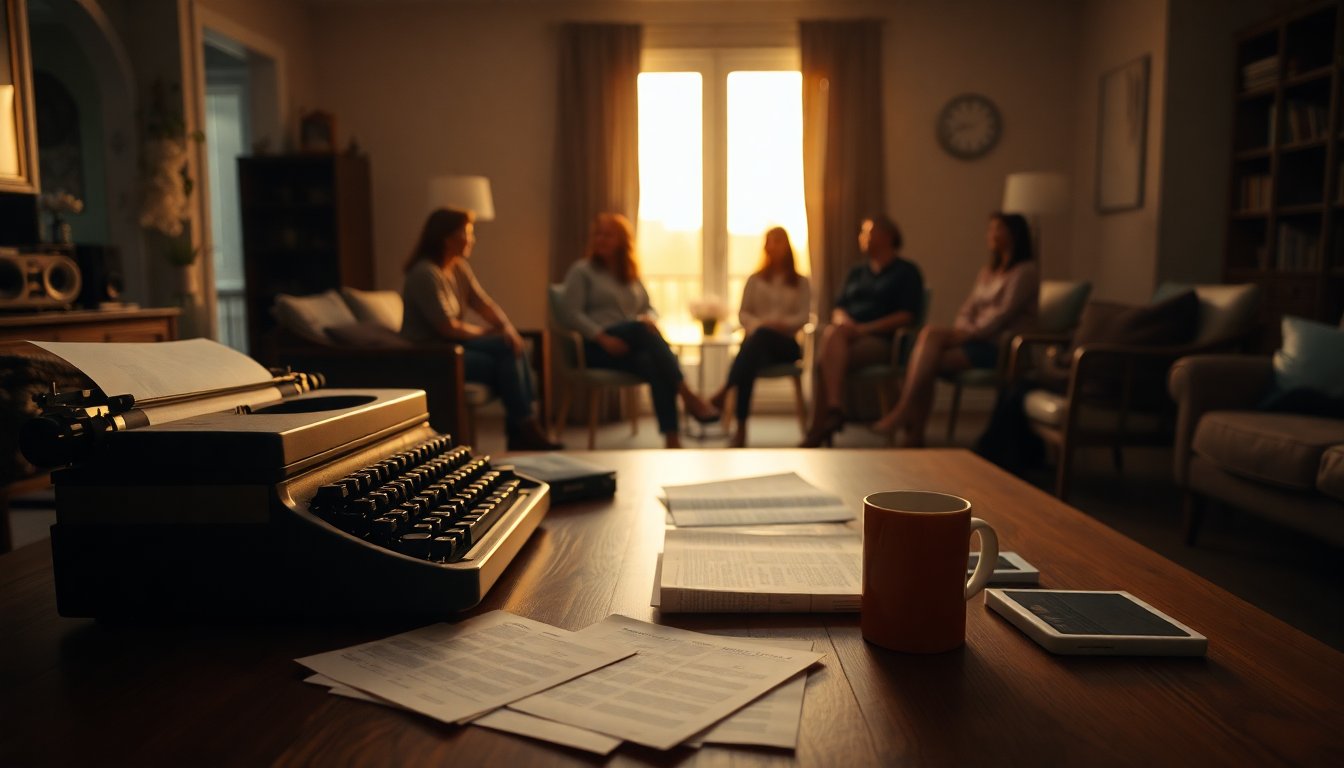
The history of the LGBTQIA+ movement is full of stories that never made mainstream textbooks. Many acts of resistance happened in private rooms, typed newsletters and small community meetings. These efforts were not accidental: they were deliberate strategies to protect people and make connections. In what follows, we highlight five women and couples whose organizing, publishing and advocacy left durable traces. Each entry emphasizes how everyday courage—forming a group, printing a magazine, documenting protests, creating schools—became a foundation for broader social change. The names may be unfamiliar, but their legacies are woven into the institutions and rights many assume were always present. The hidden archive of queer organizing matters for understanding the present.
Organizers and community builders
In 1955 Phyllis Lyon and Del Martin helped create the Daughters of Bilitis, the first formal lesbian organization in the United States, at a moment when same-sex relationships were criminalised and deeply stigmatised. What started as a private support network soon evolved into a vehicle for advocacy and mutual aid. Lyon and Martin also launched The Ladder, a national publication that made lesbian lives visible at a time when mainstream media erased them. Their long partnership became a symbol of endurance; after decades of activism they were among the earliest same-sex couples to marry in San Francisco in 2004 and again legally in 2008. The DOB model shows how collective infrastructure—clubs, newsletters, meetings—translates into political power.
Early publications and underground media
Publishing provided a lifeline for people excluded from public life. Edythe Eyde, who used the penname Lisa Ben (an anagram of “lesbian”), produced what many regard as the first lesbian zine, Vice Versa, in 1947. Typed and circulated by hand, it included stories, poems and commentary that quietly affirmed lesbian identity when open discussion could be dangerous. Similarly, small-run magazines like The Ladder connected readers across cities and decades, proving that media can be both refuge and organizing tool. These publications also inspired later waves of queer press; their DIY approach remains a model for creators who value community-controlled storytelling.
Visibility and protest
Barbara Gittings and Kay Lahusen helped turn cautious homophile-era politics into more visible protest. Gittings, who served as editor of The Ladder, pushed for direct engagement with public institutions, while Lahusen, recognized as the first openly lesbian photojournalist in the United States, recorded demonstrations and leaders with an insider’s eye. Their partnership bridged the quieter pre-Stonewall period and the more confrontational activism that followed, using both text and image to demand recognition. Their campaign work demonstrates how visibility politics—the deliberate refusal to be invisible—functions as both strategy and identity formation. Gittings died in 2007, aged 74; Lahusen passed in 2026, aged 91, leaving a substantial visual archive.
From protest to policy
Jean O’Leary moved from grassroots activism to sustained engagement with national institutions. After leaving a convent in the late 1960s and embracing her sexuality, she co-founded Lesbian Feminist Liberation in 1972 and later served as co-executive director of the National Gay Task Force. One of O’Leary’s most consequential acts was organizing the first delegation of lesbian and gay activists to meet White House officials in 1977, a clear instance of bringing queer concerns into formal political channels. She also helped launch National Coming Out Day in 1988. Her record shows the complex tension between grassroots critique and institutional negotiation—an ongoing dynamic in social movements and a key element of visibility politics.
Youth advocacy and enduring impact
Dr Joyce Hunter’s life story moves from personal hardship to institutional innovation. Born in 1939, Hunter endured a fractured childhood and later became an active participant in lesbian feminist organizing in the 1970s. After surviving a violent anti-gay attack in 1975 that left her seriously injured, she redirected her energies toward creating safer environments for young people. Hunter co-founded the Hetrick-Martin Institute and played a central role in establishing the Harvey Milk High School in New York, pioneering spaces where LGBTQ youth could learn without fear. Her work illustrates how individual trauma can catalyze lasting, structural responses—turning personal survival into public service and demonstrating the power of targeted educational programs and youth-centered advocacy.
These five entries are snapshots of different approaches—organizing, documenting, publishing, lobbying and institution-building—that together formed the backbone of modern queer life. Remembering figures like Phyllis Lyon, Del Martin, Edythe Eyde, Barbara Gittings, Kay Lahusen, Jean O’Leary and Dr Joyce Hunter helps us see the variety of tactics activists used to create safety, representation and rights. Their efforts remind us that public change often grows from private acts of care, and that the infrastructures they built—clubs, zines, archives and schools—continue to support new generations of activists and creators. The hidden history is central to understanding how far movements have come and what remains to be done.


