
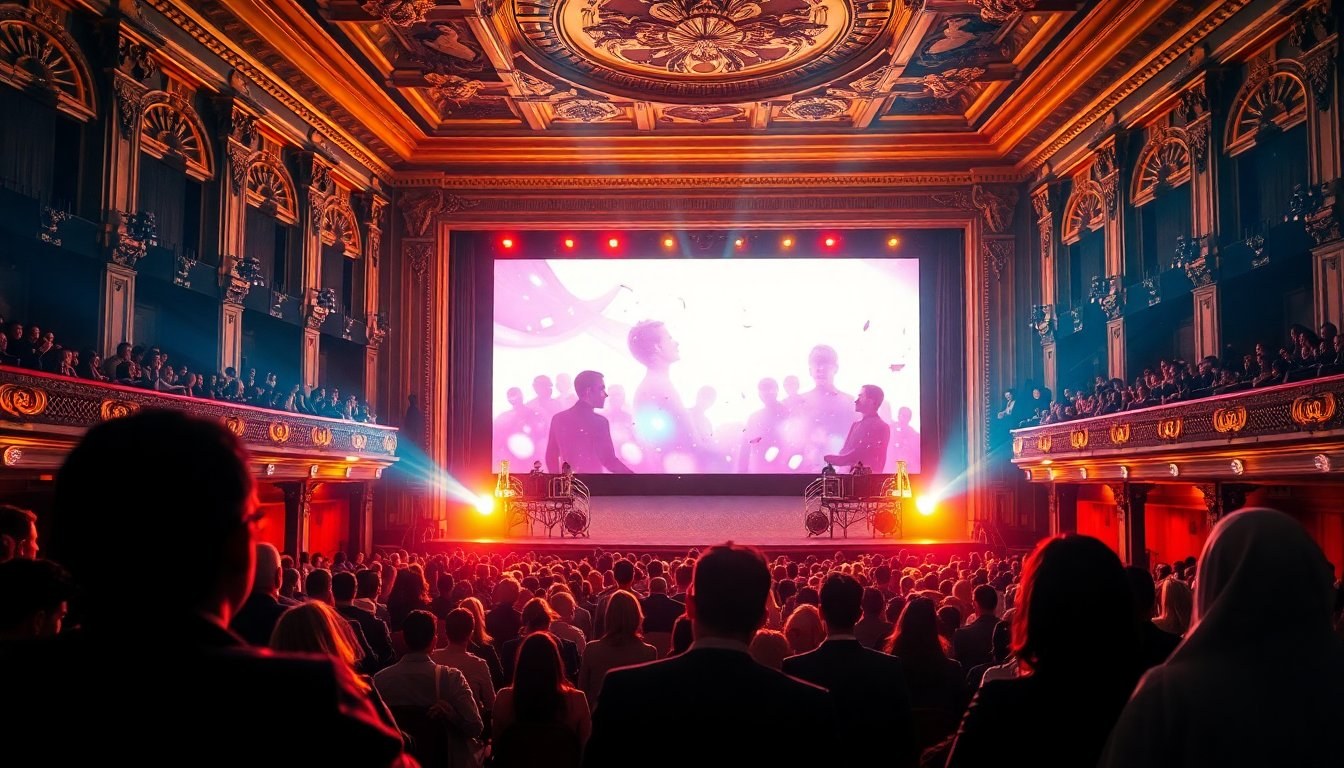
The city’s iconic theatre filled with laughter and applause when the world of The Witchy Girls arrived on a big screen for the first time. At Melbourne’s Capitol Theatre, an audience of over five hundred people gathered to watch the opening instalments simultaneously with a YouTube release on Comedy Republic TV. The premiere doubled as a screening and a live variety event, turning a web-episode launch into a communal, theatrical experience. Behind the scenes, the series was developed by Lazy Susan, winner of Drag Race Down Under, in partnership with Comedy Republic and Iris Arc Pictures, reshaping how entertainment can be produced and financed.
The premise is intentionally mischievous: best friends and amateur witches Lazy Susan and Zelda Moon navigate late-90s nostalgia, adolescent chaos and outrageous supernatural gags. The show riffs on familiar teen-witch formulas from the 1990s but deliberately flips them, positioning its leads as self-absorbed and morally dubious rather than virtuous paragons. The creative tone leans into camp and queer exaggeration, mixing references to shows like Sabrina the Teenage Witch and Buffy with biting, irreverent humour. The project’s life was catalysed while Lazy Susan was travelling to film Drag Race Down Under vs The World; after a funding rejection, a live-first approach was proposed and adopted.
A new production model driven by audiences
Rather than relying solely on traditional grants, The Witchy Girls is financed through a hybrid of ticket sales and merchandise: every paid seat and item bought at events flows straight back into production. The team intentionally releases episodes for free online on Comedy Republic TV to widen reach, while using in-person events as both fundraising and performance platforms. This strategy treats viewers as active contributors to a creative economy, and the producers describe the nights as experiments in viewer-supported art. The model challenges conventional commissioning routes and demonstrates how queer performance traditions—where shows were historically funded by box office and bar sales—can be translated into a modern indie production framework.
Audience engagement as investment
At the live events, theatrical elements extend beyond the screen: compère sets, surprise cameos and onstage numbers turn a film screening into an immersive night out. The producers frame ticket-holders as backers who directly enable future episodes, which fosters a reciprocal relationship between creators and fans. Merchandise and live companion performances are not extras but core components of the funding mechanism. This setup creates urgency and excitement around each screening, incentivising attendance and social participation. It’s a return to live entertainment roots while harnessing digital platforms to expand the series’ footprint.
The premiere: spectacle, cameos and the Y2K brawl
The first episode plunges viewers into New Year’s Eve 1999, as the characters confront a tech-inspired antagonist and apocalyptic anxieties of the era. Onscreen, Lazy Susan and Zelda Moon tussle with a seductive, sentient computer—presented visually with Alaska Thunderf*ck’s face on an iPad and the body performed by Victoria Bitter—and the show-stopping personification of the Millennium Bug, played with riotous comic timing by Geraldine Hickey. The Capitol Theatre audience laughed through the absurdity, and the screening was punctuated by live numbers and surprise appearances that amplified the on-camera chaos and created an electric atmosphere that a home stream cannot replicate.
Memorable moments and local talent
Local performers and guest stars enriched the evening: Rhys Nicholson delivered a warming stand-up set and later slid back into a role from the series, while Tony Armstrong and other surprise guests landed punchlines that had the crowd roaring. Onstage, Victoria Bitter’s performance left an indelible mark on the evening’s energy, and closing acts—featuring Jules Stretch, Lazy Susan, Zelda Moon and the CarleyBeth dancers—sent the audience home buzzing. A playful, partially improvised Q&A hosted by a former member of The Beatsie Girls added to the intimacy of the event, keeping the mood communal and unruly.
Where to see it next and how to support
For those wanting to catch future live experiences, upcoming screenings were announced as follows: Thursday, 14 May 26 will present Episode 3: The Witchy Girls vs Killing Heidi and Episode 4: The Witchy Girls vs Love, while Thursday, 28 May 26 will feature Episode 5: The Witchy Girls vs The Future and Episode 6: The Witchy Girls vs STDs. Tickets and merchandise purchases help underwrite production costs and allow the team to continue releasing episodes online for free. For more information and to buy passes, visit the show’s official website. For broader LGBTIQA+ news and community coverage, resources such as qnews.com.au offer regular updates on queer arts and culture in Australia.


