
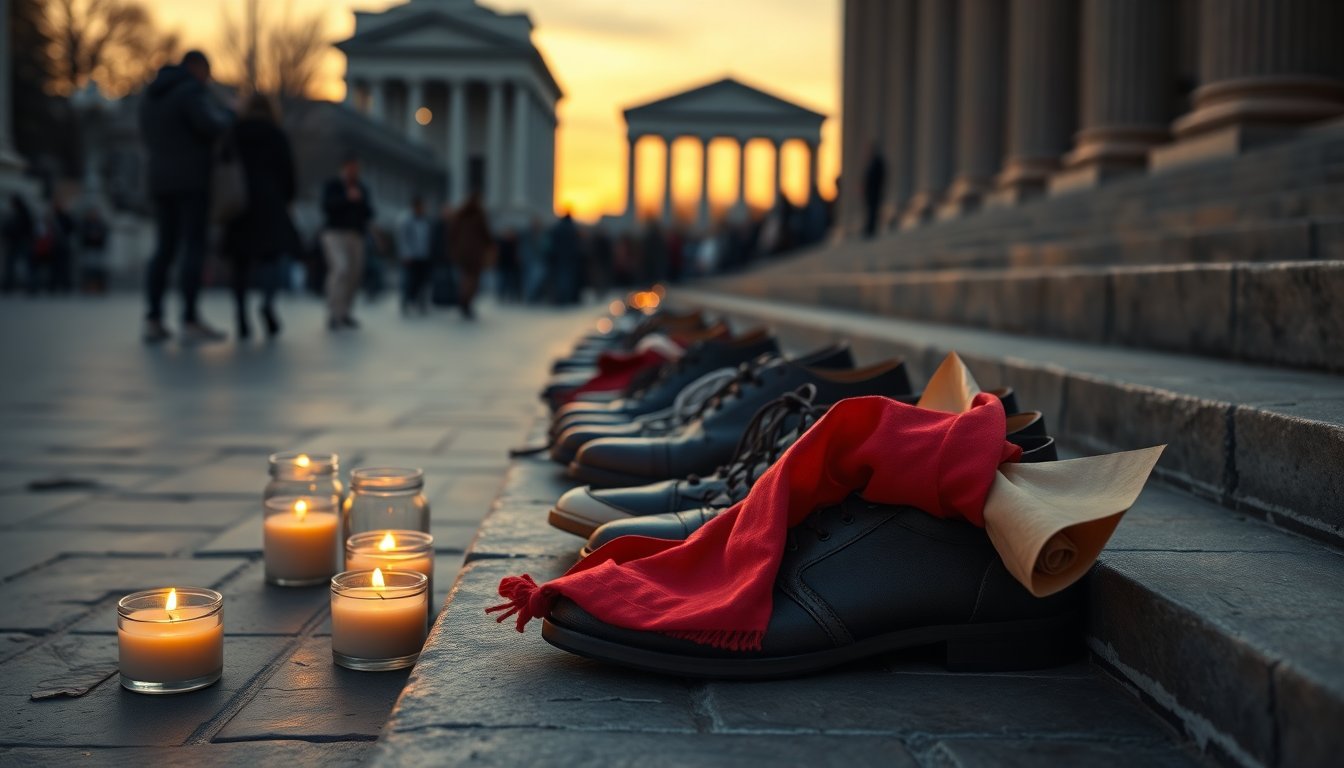
Content warning: this article discusses domestic, family and sexual violence. Across Australia this weekend, coordinated demonstrations under the banner No More: National Rally Against Violence will bring communities together to press for urgent reform. The events are organised by What Were You Wearing Australia, an ACNC-registered, volunteer-led charity. Organisers say the goal is to force systemic change, increase funding for frontline services and dismantle damaging narratives that shift blame onto survivors. The action is planned in multiple locations to ensure that voices from every state and territory are visible and heard.
The rallies are intended to confront both policy failure and cultural attitudes. Participants will call for clearer accountability from governments, stronger prevention strategies and better resourcing for support services. Central to the organisers’ message is the challenge to victim-blaming and the demand for responses that centre survivor safety. The campaign frames DFSV as a public health and justice issue; the organisers describe DFSV as the shorthand for the systemic problem of violence within domestic, family and sexual contexts.
The scale of the problem and who is most affected
Data cited by campaigners underlines the urgency: This year alone, 20 women and six children have been killed in Australia, and national figures indicate that on average one woman is killed every eight days by an intimate partner. Broader prevalence statistics show that around one in four women have experienced violence from an intimate partner since the age of 15. Marginalised groups are disproportionately impacted: women with disability face roughly twice the risk of sexual violence compared with those without disability, and Aboriginal and Torres Strait Islander women are far more likely to suffer severe assaults and hospitalisation related to family violence. The long-term consequences include housing instability, with domestic and family violence cited as a leading cause of homelessness for women and children.
Online harms and wider cultural risks
Activists also point to online ecosystems that normalise or teach sexual violence. Recent reporting, including a CNN investigation, has identified online communities described by journalists as an “online rape academy”, where advice on how to drug or assault partners was allegedly shared among tens of millions of users. Campaigners argue these digital spaces both reflect and accelerate harmful attitudes that underpin physical violence. Advocates say preventing violence requires addressing online cultures as well as in-person behaviours, with policy responses that span law enforcement, platform accountability and education.
When and where to show up
The coordinated action runs across Saturday, 18th April and Sunday, 19th April, with gatherings planned in 16 locations. On Saturday, 18th April events include: Dharawal / Wollongong at Crown St Mall Amphitheatre (2pm); Gadigal / Sydney at Belmore Park (12pm); Kamilaroi / Gomeroi / Tamworth at Town Hall (11am); Naarm / Melbourne at State Library Victoria (11am); Meeanjin / Brisbane at Queens Park (Gardens) (10am); Tarndanya / Adelaide at Parliament House (11.30am); Yugambeh / Gold Coast at Albert Park (10am); and Tawampa / Toowoomba at Frogs Hollows (12pm). Organisers ask attendees to respect safety guidelines and to centre survivor-led testimony during proceedings.
Sunday gatherings and practical information
On Sunday, 19th April the program continues with rallies in Ballarat at Town Hall (12pm); Boorloo / Perth at Forrest Chase (9.30am); Darkinjung / Central Coast at Gosford Waterfront (12pm); Dhubu / Dubbo at Bon Jane T-Mart, 223 Macquarie Street (11am); Gimuy / Cairns at Fogarty Park (12pm); Gubbi Gubbi / Sunshine Coast at Foundation Square (10am); Ngunnawal / Canberra at Regatta Point (12pm); and Nipaluna / Hobart at Parliament Lawns (12pm). Whether attending to protest, support survivors, or observe, people are encouraged to check local event pages for accessibility details, times and any last-minute changes.
About the organisers and how to get help
What Were You Wearing Australia describes itself as a volunteer-led charity founded by young, marginalised people committed to ending domestic, family and sexual violence. The organisation has consistently called for expanded funding for frontline services, improved prevention work and stronger governmental accountability. If you or someone you know needs immediate assistance, support is available: QLife on 1800 184 527 or at QLife.org.au, Lifeline on 13 11 14, and beyondblue on 1300 22 4636. For community stories and LGBTIQA+ coverage, see qnews.com.au and the outlet’s social channels.


