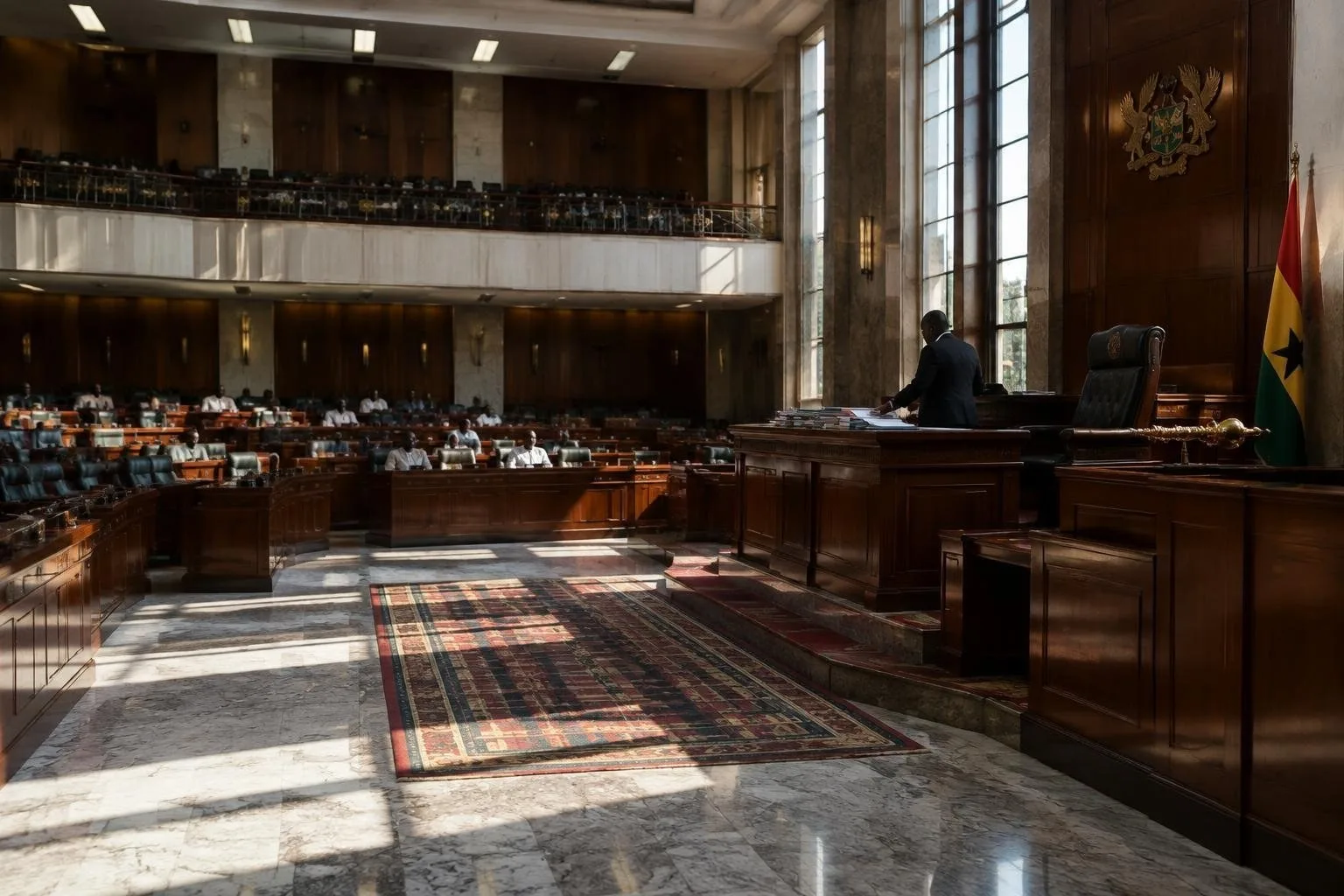
On 10 November 2026 the Ghanaian legislature announced that the Human Sexual Rights and Family Values Bill – commonly referred to as the anti-LGBTQ bill – would no longer be considered “passed”. The decision came after Speaker Alban Bagbin raised concerns that the May 29 vote failed to meet the constitutional quorum and contained substantive drafting inconsistencies. By nullifying the earlier approval, Parliament has opened the door for a fresh reading and a more transparent legislative process.
Procedural irregularities trigger a reversal
The speaker explained that the House had fewer than the required 50 members present when the bill was approved, a clear breach of Ghana’s constitutional rules. Quorum – the minimum number of legislators needed to make binding decisions – was not reached, meaning the May 29 outcome could not legally stand. Bagbin also noted that the Legislation Drafting Department identified mismatches between the version voted on and the final draft, errors that could not be corrected without a new parliamentary vote.
During the emergency session, members voted to rescind the earlier decision. Bagbin stated, “If the issue were merely a typographical mistake, the drafter could fix it, but once a decision has been taken by Parliament, it must be reconsidered by the House itself.” The vote to undo the passage was recorded as an “aye” majority, formally returning the bill to the second-reading stage.
From harsh penalties to a watered-down version
The legislation’s journey began in February 2024, when an initial draft proposed severe penalties for anyone who promoted or advocated for LGBTQ individuals. Under that version, journalists, doctors, lawyers, researchers and even clergy could face up to five years in prison, with a ten-year term if the alleged promotion involved minors. The bill attracted intense domestic and international criticism for criminalising basic professional activities.
When the bill resurfaced in 2025, its sponsors – a coalition that included Rev. John Ntim Fordjour and several MPs such as Samuel Nartey George and Helen Adwoa Ntoso – introduced amendments that exempted professionals providing services to LGBTQ persons. The revised text shifted liability onto those who sponsored or financed advocacy campaigns, still allowing imprisonment of up to five years for such sponsors. Opposition MPs, particularly from the New Patriotic Party (NPP), argued that this “watered-down” version removed the law’s intended force while preserving its punitive core.
Majority party members from the National Democratic Congress (NDC) were accused by the NPP of further diluting the original intent, leading to a partisan clash over the bill’s final shape. NPP legislators claimed the House failed to achieve a true bipartisan consensus, while NDC leaders maintained that the amendments reflected necessary compromises to address human rights concerns.
Political fallout and next steps
The rescission has amplified existing tensions between Ghana’s two largest parties. NPP representatives highlighted the quorum breach as evidence of procedural negligence, whereas NDC MPs warned that the opposition’s criticism could be a tactic to stall a law they deem socially unacceptable. The speaker’s intervention has, however, been welcomed by civil-society groups, who view the move as an opportunity to revisit a bill that has kept the LGBTQ community in a state of fear since 2024.
With the bill now slated for a second reading, MPs will have to debate both the substantive content and the procedural legitimacy of the legislation. If the House eventually passes the bill again, it will be sent to President John Mahama for signature, marking the third parliamentary endorsement of the contentious measure. Until then, the legal status of the anti-LGBTQ framework remains uncertain, and advocacy groups continue to call for a comprehensive review that respects constitutional safeguards and human rights standards.