
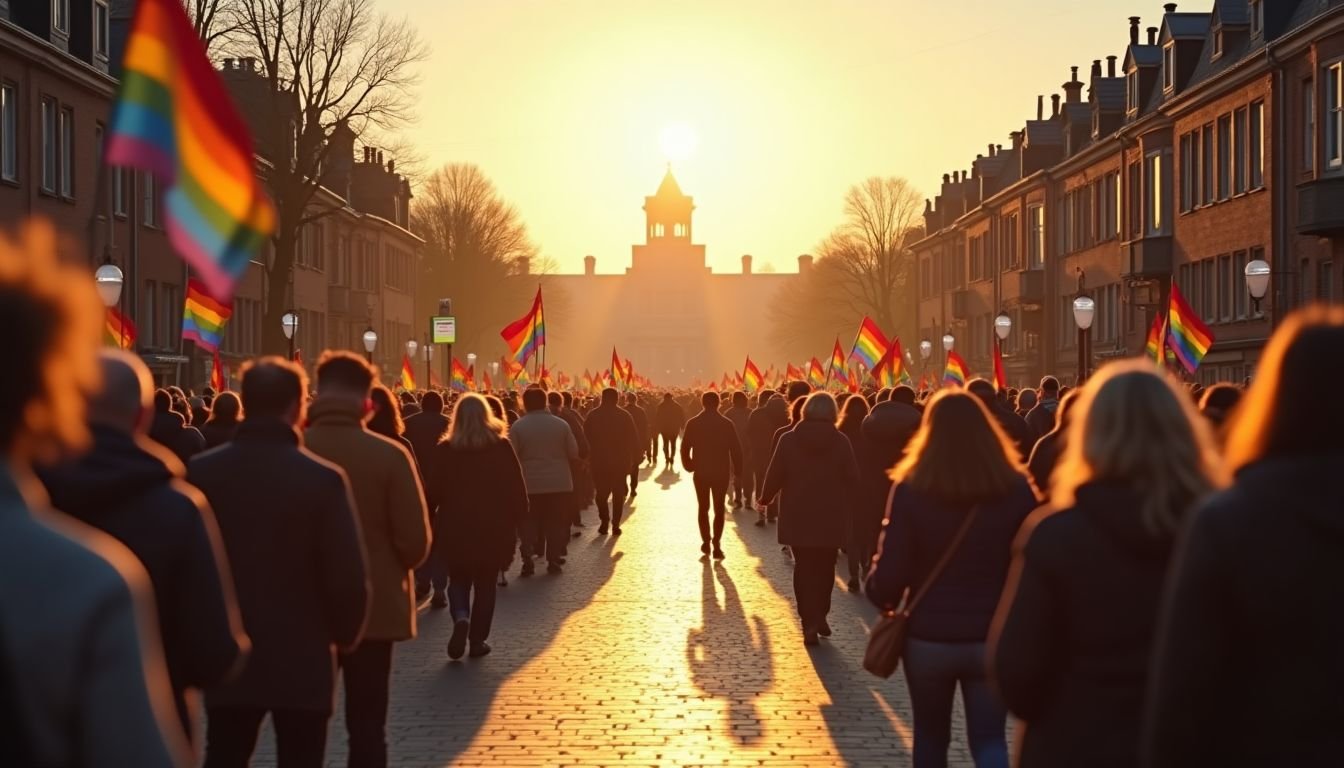
The small northern town of Faches-Thumesnil became the focus of a heated public discussion after a planned Pride march went ahead on April 25 despite an earlier announcement that it had been cancelled. Roughly 550 people took part, according to the prefecture, carrying rainbow flags and banners from political and human rights groups. The episode combined questions of local organisation, legal authority over demonstrations and a symbolic dispute over the display of the rainbow flag on the town hall.
What quickly escalated into a national story involved several actors: the municipal programme of the Fiertés faches-thumesniloises, the neighbouring town of Ronchin, the regional collective Lille Pride, and the newly elected local leadership. Accusations of homophobia were levelled online and in the press after the announcement, and the prefect later condemned threats aimed at local officials. The following sections explain the sequence of decisions, the legal framework for public demonstrations, and the reactions that followed.
Timeline and local organisation
The wider festival of Fiertés in Faches-Thumesnil is a municipal initiative that began in 2026 and is scheduled with a slate of events from April 6 to May 14. The march itself was conceived as a small procession co-organised with the neighbouring commune of Ronchin, intended to symbolically link both towns. On April 14, Ronchin’s team informed Faches-Thumesnil that it could not carry the partnership forward because the time available to complete security and logistical arrangements was too short. Faches-Thumesnil posted a message on April 17 explaining that the march had been cancelled following Ronchin’s withdrawal, which in turn fuelled public speculation.
Key municipal timings mattered. Ronchin’s mayor, Ulric Vanacker, notes he was elected on March 15, while Faches-Thumesnil’s new mayor, Brice Lauret, took office after the second-round results and officially assumed his functions on March 28. Local officials say those calendar shifts reduced the time available to finalise the parade’s practical arrangements, including coordination with associations and police units that do not routinely staff weekend events.
Who had authority to cancel?
Legally, the cancellation of a street demonstration involves the prefecture: any public march must be declared there, and only the prefect may refuse a date or route with a formal justification. That administrative reality became central to the debate because many reports portrayed the decision as a unilateral municipal act. In this case, organisers and the prefecture said the march was authorised, while municipal communications emphasised that Ronchin declined to co-organise at short notice. The distinction between a municipally organised festival and a declared public demonstration created confusion in media coverage.
Administrative details and evidence
An exchange of emails dated April 14 was cited by local officials to support the claim that insufficient lead time prompted Ronchin’s withdrawal. Meanwhile, the municipal team in Faches-Thumesnil stresses that most events in the festival remain scheduled, saying that one cancelled collaborative element does not amount to an overall cancellation of the Fiertés programme. The prefecture’s involvement and the documented correspondence are central to understanding who could lawfully stop a march.
Public reaction and political context
The removal of a rainbow flag from the town hall’s fronton by the new municipal team added a symbolic dimension to the controversy. Organisers and activists interpreted both the flag’s removal and the announcement about the march as part of a broader political shift. Lille Pride publicly criticised the developments, arguing that the moves fed into a climate of increasing hostility toward LGBTQIA+ people. National outlets and commentators drew parallels with other municipalities where new leadership has changed local symbols and policies.
Among the figures named in coverage was Nicolas Heyn, who was identified by some as the coordinator of Lille Pride and previously worked as director of cabinet for Faches-Thumesnil’s former mayor, Patrick Proisy. Participants at the march displayed banners and chants addressing local leadership—some accusing the municipal team of concealed homophobia—while the prefect condemned threats and intimidation targeting the mayor following publicity around the affair.
What the mayor says
Mayor Brice Lauret and his administration deny acting out of hostility toward LGBTQIA+ residents. They say the decision to vary display flags was aimed at respecting the legal neutrality of public buildings ahead of the national commemorations on May 8 and that they regret the timing of removals. Lauret also underlines that the municipal festival still includes the majority of planned events, arguing that a genuine opponent of such programmes would not maintain most activities.
In the end, the march on April 25 went ahead and attracted roughly 550 participants, turning a municipal scheduling dispute into a wider conversation about symbolism, local administration and the legal mechanisms that govern public demonstrations. The episode highlights how logistical choices, electoral turnover and symbolic gestures can combine rapidly into a controversy that reaches national headlines.


