
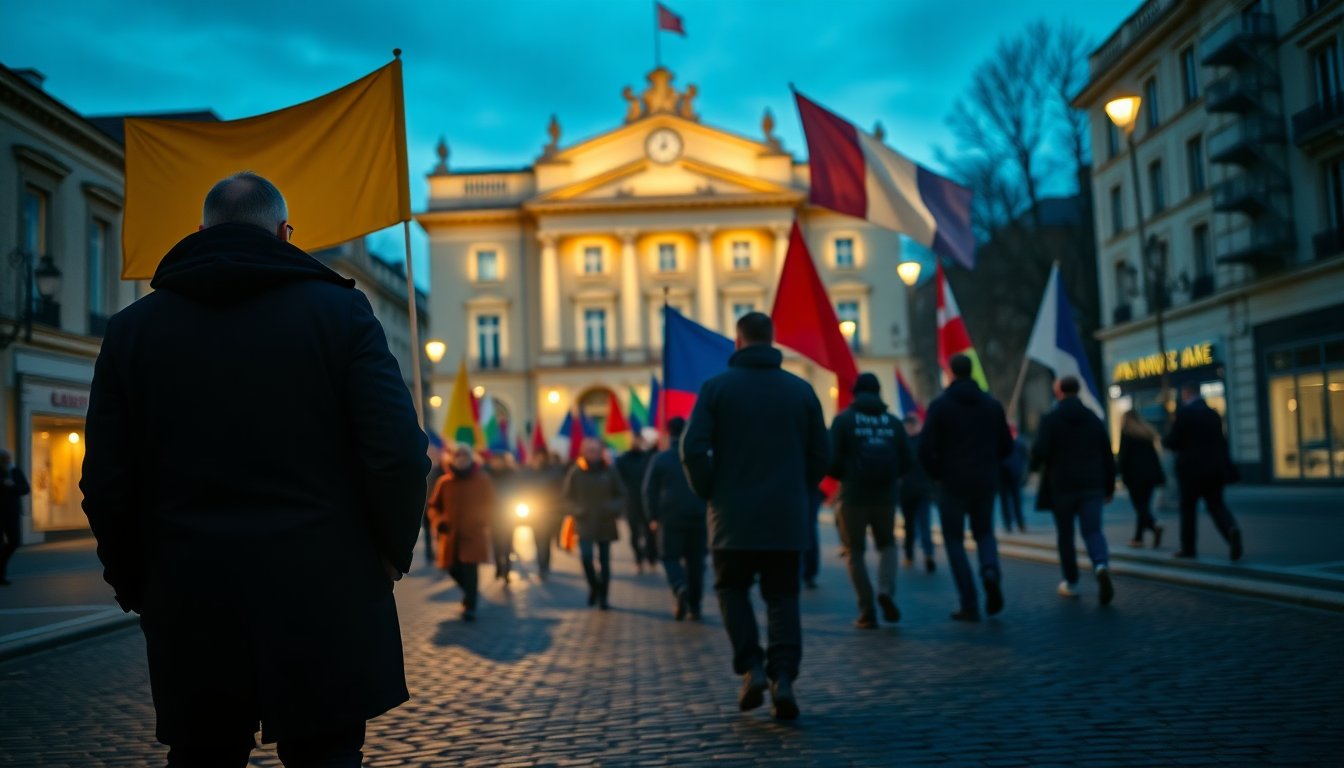
The town of Faches-Thumesnil, in the Lille metropolitan area, saw its scheduled Pride march take place following a short but intense public dispute. On 27/04/2026 the local calendar marked a demonstration that, in the days leading up to it, had been the subject of heated debate after the newly elected mayor announced a cancellation. Organisers and supporters argued that the move was an attempt to prevent public expression, and critics accused the municipal leader of homophobia in refusing to allow the event to go forward.
How the dispute unfolded
The announcement by the new right-leaning mayor that the event should not take place triggered immediate pushback from civil society groups and local activists. Organisers maintained their permit and gathered support, saying they would march regardless of municipal statements. The situation quickly became a focal point for regional media and political commentators, with some framing the question as one of civic rights and others treating it as a local political controversy. Participants described a feeling of being obstructed and framed their response as a defence of the right to assemble and to celebrate identity in public.
The legal context and who holds authority
At the centre of the legal argument was a principle often misunderstood in public debate: in France, the power to formally prohibit a large-scale public event such as a Pride typically rests with the prefect, not with municipal executives. The prefect is a state representative empowered to make decisions on public order and safety across a department, and only the prefect’s decision can legally annul an authorised demonstration of this nature. This distinction became central to the story, as organisers and legal observers pointed out that a mayor cannot unilaterally cancel an officially notified march without the prefect’s intervention.
Role of the prefect clarified
Explaining the prefect‘s role helped clarify why the march could still lawfully proceed. The prefect examines security assessments and can issue bans when there is a demonstrable risk to public order; absent such a ruling, the event permit remains valid. Local authorities, including mayors, may express opposition or raise concerns, but they do not possess the unilateral legal authority to revoke a permit for a regional awareness event like a Pride. This legal nuance shaped both the organisers’ strategy and the way journalists reported the controversy.
Public reaction and the media dimension
Organisers and participants described the municipal move as an attempt to stifle expression. One activist said the decision felt like an effort to stop the demonstration, calling it a form of disguised homophobia. Supporters gathered and marched, noting that the event’s continuation was as much about asserting rights as it was about celebrating community. The presence of regional press and social media commentary amplified the dispute, turning a local administrative decision into a broader story about civic liberties and political symbolism in the Lille area.
Implications for local politics and civic life
Beyond the immediate march, the episode raises questions about the relationship between elected municipal officials and state representatives when it comes to managing public events. The controversy highlighted how easily procedural matters—who has the power to cancel—can be interpreted as moral or political stances. For many in Faches-Thumesnil and the surrounding communities, the march that went ahead was both a practical assertion of the right to assemble and a symbolic rebuke to what participants viewed as discriminatory rhetoric from local leadership.
As the dust settled, organisers reflected that the event’s success underscored the resilience of civic mobilisation, while observers noted the episode as a reminder of the distinct roles played by municipal and state authorities in France. The debate that followed centred on transparent decision-making and on ensuring that legal processes are respected so that public gatherings—particularly those that express social identities—are not curtailed without due cause.


