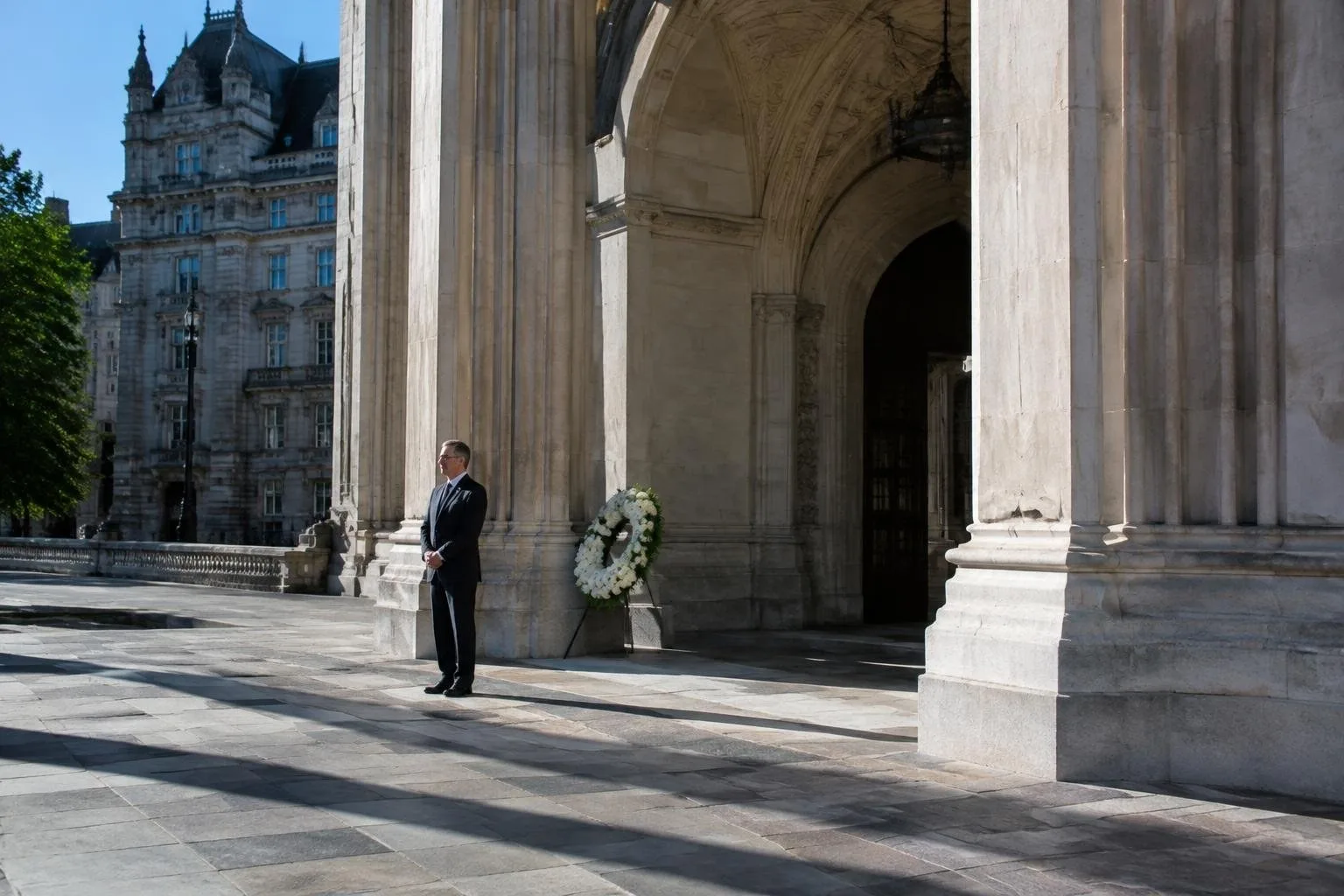
When Wes Streeting became the United Kingdom’s first openly gay defence secretary in July 2026, he immediately entered a hostile digital arena. Within weeks, the minister reported an “unbelievable volume” of attacks, many aimed at his sexual orientation rather than his policy agenda. The latest flashpoint arrived in early November, when a short video surfaced claiming to show Streeting standing outside the Foreign and Commonwealth Office in a black skirt, high heels and a handbag during the Remembrance Sunday service.
The viral clip and its hateful commentary
The 22-second excerpt was shared on X (formerly Twitter) on 10 November 2026, accompanied by a Korean-language caption that mocked the minister and linked his presence to the historic ban on gay people in the British armed forces. The post amassed more than a million views and was quickly reposted in several languages, each iteration adding homophobic slurs and insinuations that the minister’s identity somehow undermined the military. In South Korea, where a 2019 Pew survey found that 53 % of respondents opposed societal acceptance of homosexuality, the clip provoked especially virulent remarks.
Technical analysis reveals deep-fake manipulation
Researchers employed reverse-image searches, keyword queries, and frame-by-frame comparisons to locate authentic footage of the ceremony. Multiple media outlets, a livestream from the British government, and an Instagram/TikTok post by independent journalist Louis Errington all display Streeting in a traditional black overcoat, dark trousers and ordinary shoes. The visual discrepancy lies entirely in the lower half of the body.
Using the Mever deep-fake detector (part of the InVID-WeVerify suite), the suspect clip received an 87 % probability of having been generated with artificial intelligence. The tool flagged the skirt and heels as digitally pasted onto an otherwise genuine broadcast. Moreover, the original, unaltered video shows the defence secretary holding a red remembrance poppy: a detail retained in the fake, suggesting the manipulator only edited the lower garments.
Why the hoax matters beyond the image
Britain lifted its ban on gay people serving in the armed forces only in 2000, decades after partial decriminalisation in 1967. Streeting’s appointment therefore symbolizes a significant cultural shift, which some opponents weaponise through disinformation. The Korean post explicitly reminded readers of the military’s historic exclusion of LGBTQ individuals, attempting to frame the minister’s visibility as a betrayal of tradition.
South Korean law, for instance, still criminalises same-sex activity among military personnel, punishable by up to two years in prison. By circulating a fabricated image that ridicules a gay defence minister, the perpetrators exploit existing legal and social prejudices to amplify hate. The incident underscores how deepfake technology can be harnessed to reinforce existing biases, turning a visual trick into a catalyst for harassment.
Fact-checking organisations across Europe have consistently debunked the claim, confirming that Streeting attended the Cenotaph ceremony in conventional menswear. The minister himself posted photographs from the event on X on 9 November, clearly showing the trousers and black shoes that match the authentic footage. No credible source has produced a genuine video of him in a skirt.
In the broader context, the episode reflects a growing pattern of digitally altered media being deployed against public figures, especially those from marginalized groups. While the clip was short, its rapid spread and the accompanying hateful commentary illustrate the potency of visual misinformation. Vigilant verification, as demonstrated by the joint efforts of journalists, AI-detectors and open-source researchers, remains essential to counter such attacks.