In the late 1960s and early 1970s, the gay community invented a discreet signaling system known as the hanky code. By choosing a coloured scarf and the side on which it was worn, an individual could indicate a specific sexual preference without saying a word. Hanky code was simultaneously playful and serious, a blend of coded language and bold self-expression. Karl Beck, now 45, first encountered this practice when he was 20, strolling through the streets of San Francisco and watching the vivid display of scarfs that marked desire and identity.
Reimagining the hanky code in a New York studio
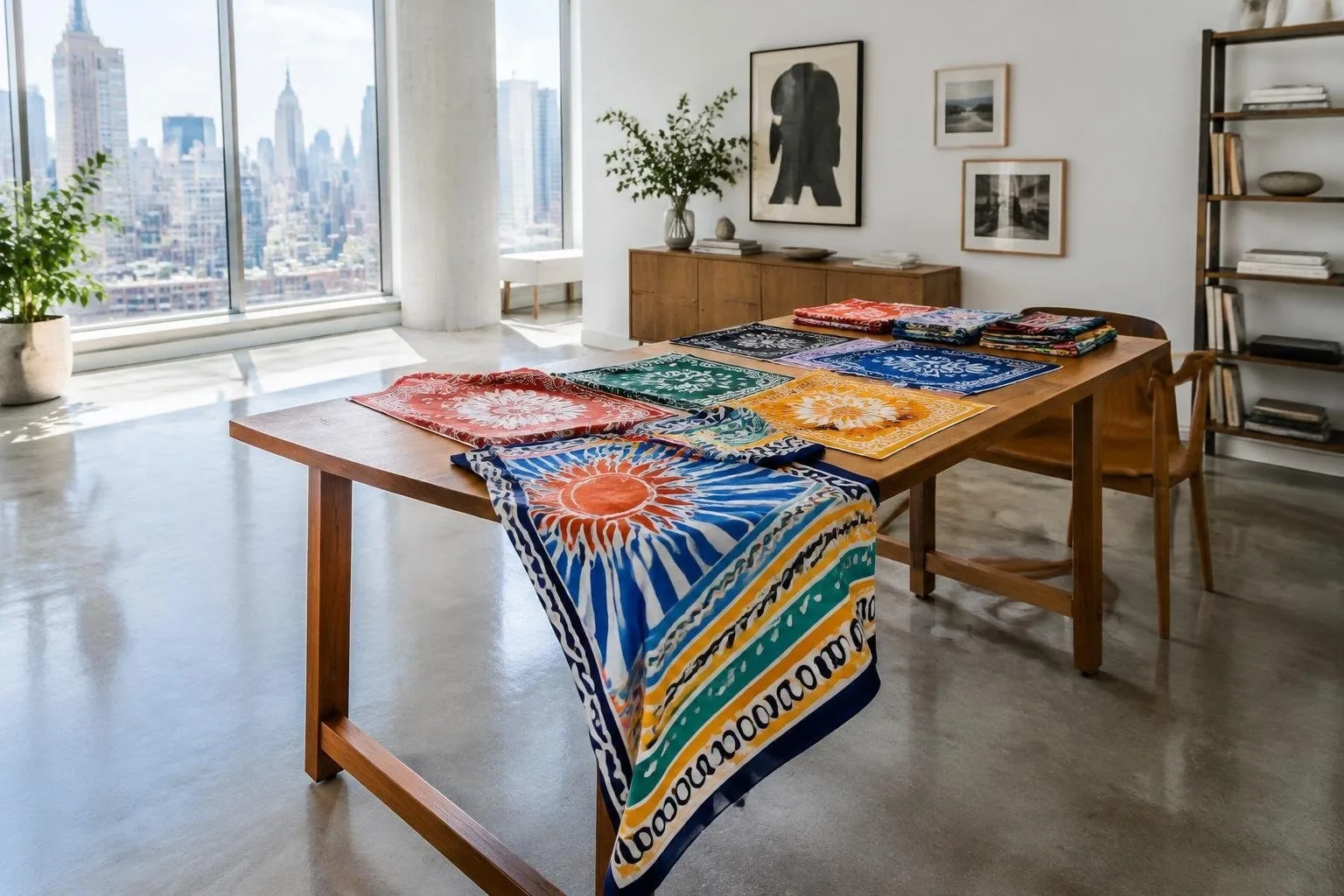
Back in his New York workspace, which he named The Haunted Disco, Beck translates the vintage signal into a contemporary art form. He screen-prints bandanas that feature mythological creatures, fetish-inspired figures and cheeky, erotic motifs. The designs echo the flamboyance of the disco era while injecting a modern graphic sensibility. Each piece becomes a wearable canvas that carries the historic code forward, inviting a new generation to discover its meaning.
Design workflow and artistic influences
Beck’s creative pipeline begins with a sketch or a digital concept generated in Procreate, Canva or Photoshop. Although he occasionally uses artificial intelligence to spark ideas, he finds the output requires extensive manual refinement, so the AI step rarely saves time. Before committing to colour, he prints the composition in black ink to test contrast and line clarity, because multi-colour ink applications can be technically demanding. The final artwork is then transferred onto high-quality cotton bandanas through a meticulous screen-printing process.
Global reach and collaborations
Beck’s colourful creations have found buyers far beyond the United States. Orders have arrived from rural American towns, Canada, Japan and even Australia, showing that the appeal of the revived hanky code transcends borders. He also works on commissions, collaborating with other creators. A long-standing partnership grants him access to the works of Dom “Étienne” Orejudos, whose illustrations are preserved at the Leather Archives and Museum in Chicago, a centre dedicated to leather and fetish cultures. This relationship enriches Beck’s palette and connects his modern prints with historic queer art.