
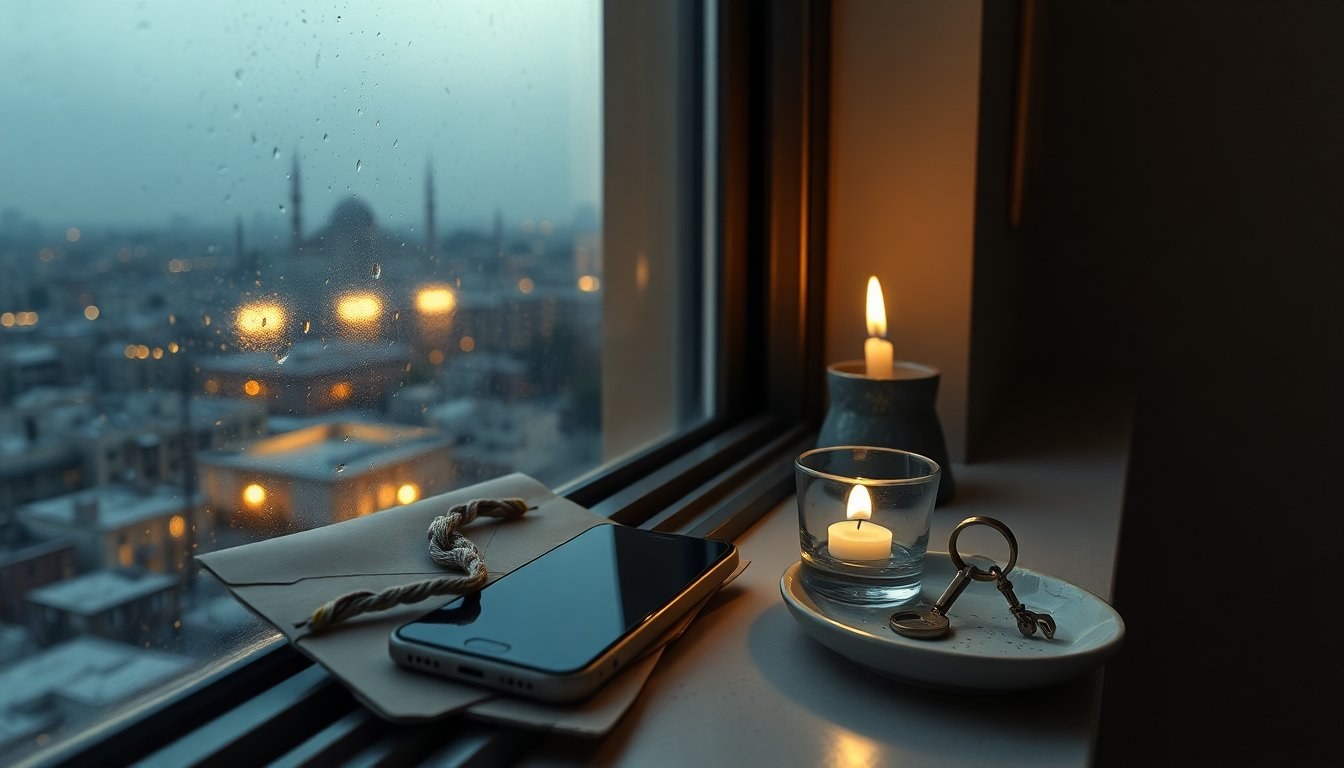
In Baghdad, an often invisible generation is finding ways to exist despite mounting pressure from authorities. This piece, first published 04/05/2026 16:12, draws on reporting and photography published in the spring issue of têtu·, with images by Pauline Gauer. The article explores how young people labeled as LGBTQ+ by international discourse are redefining safety by assembling quiet networks, adapting to shifting threats, and protecting one another from public and legal hostility. The word clandestine here is used to describe both the secrecy of daily life and the improvisational strategies that help sustain it.
This report does not attempt to catalog every risk but rather to show how creativity and community respond to repression. Interviewees discussed everything from discreet social events to encrypted communication and informal housing arrangements. The account emphasizes the interplay between state homophobia—a term denoting official policies, rhetoric or tolerated violence targeting sexual and gender minorities—and grassroots survival tactics. Photographs by Pauline Gauer for têtu· accompany the text, capturing moments of ordinary life that must remain private.
Hidden networks and daily tactics
Young people in Baghdad build layers of protection that blend social intuition with simple technological tools. Many rely on encrypted messaging and careful vetting to organize meetups, while others prefer ephemeral spaces—homes, private rooms, or transient gatherings—that function as informal community centers. These practices are examples of what activists call low-profile resilience, a combination of subtle resistance and survival. The networks are often informal and fluid, meaning they can adapt quickly when a venue becomes unsafe or when rumors of raids circulate. Within these circles, mutual aid—food sharing, temporary shelter, and emotional support—plays a stronger role than formal institutions ever could.
Risks, stigma and state pressure
The environment is marked by a range of threats: social exclusion, targeted harassment, arbitrary detention and physical violence. Where laws are vague or selectively enforced, state homophobia becomes a lived reality in which police or militia actions, sectarian dynamics and social shaming intersect. Families may react with rejection, and public exposure can carry legal as well as social consequences. Understanding these dynamics requires recognizing that risk is not uniform: gender expression, socioeconomic status and neighborhood can dramatically alter someone’s vulnerability.
Negotiating visibility
Visibility is a strategic choice rather than a simple identity marker. Some young people adopt discreet forms of self-expression to reduce exposure, while others move between social circles, calibrating how much they reveal depending on context. The term situational identity emerged in interviews to describe this practice: identities are performed and withheld as safety dictates. For many, this careful modulation is a daily labor that consumes emotional resources but also sustains social ties and personal dignity.
Community care and cultural survival
Amid constraints, community care is both a practical necessity and a cultural response. Informal mentors provide knowledge on avoidance tactics, local medics offer discreet healthcare advice, and artists and musicians keep cultural life alive in private settings. These activities may be small—a shared meal, a private photo shoot, a coded invitation—but they create a continuity of belonging. In this context, collective resilience is a mixture of emergency response and cultural maintenance: keeping traditions, humor and creativity alive even when public platforms are closed.
Documenting and telling stories
Documentation, including photography and first-person testimony, serves a dual purpose: it records experiences for wider audiences and validates the dignity of those living in hiding. The images by Pauline Gauer published in têtu· offer a careful visual archive that protects subjects while conveying the textures of life in Baghdad. Such work is often coordinated with strict consent practices and anonymity measures to minimize risk. For international readers, these accounts translate local practices into an accessible language of survival and solidarity.
Ultimately, life for queer youth in Baghdad is shaped by a tension between concealment and connection. While public space is constricted by state homophobia and social stigma, private networks continue to evolve, demonstrating a persistent capacity for adaptation. The spring issue of têtu· presents these stories not as sensationalist exposes but as urgent testimony: young people are inventing ways to live, love and create in conditions that demand both caution and courage.


