
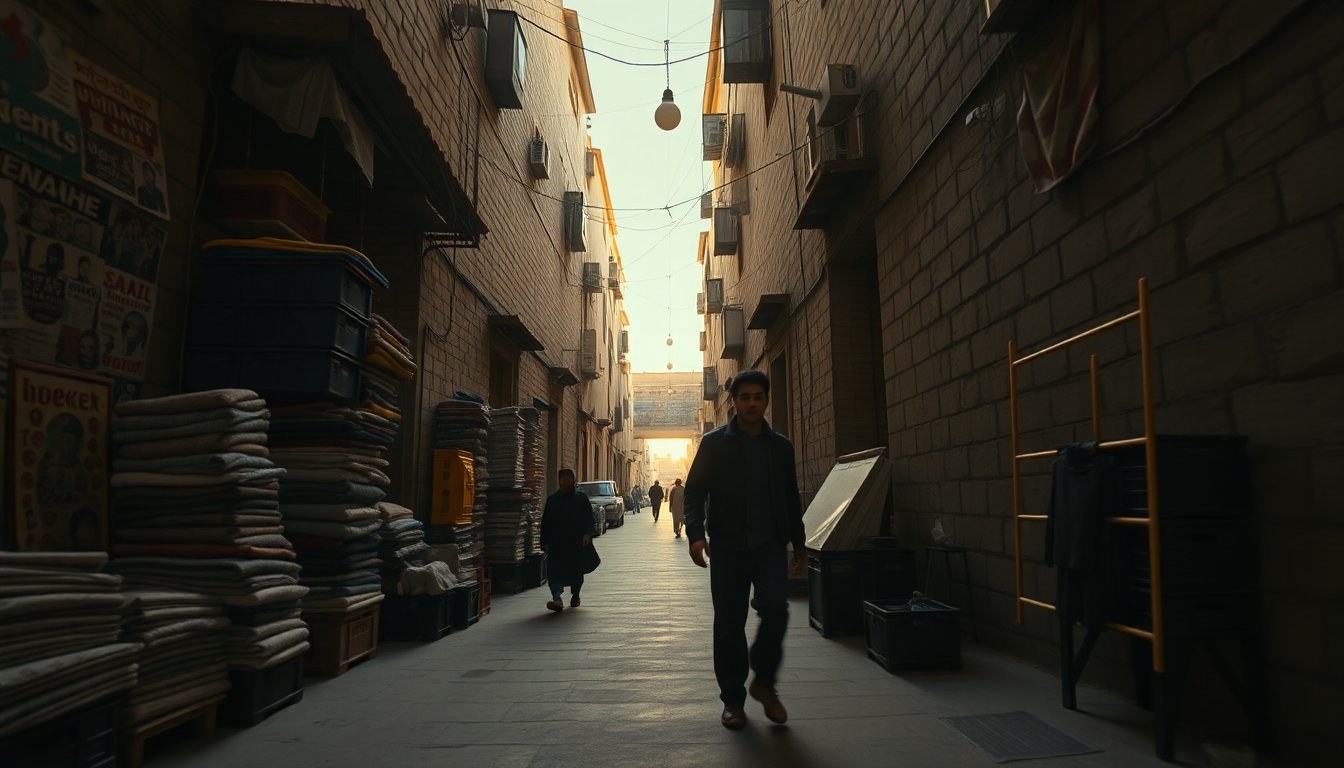
In the crowded alleys of central Baghdad, a mixture of commerce and routine conceals private lives lived on the margins. The people quoted here use pseudonyms and their stories are presented with names changed for security. Against a backdrop of market stalls, cafés and narrow lanes, several young Iraqis try to keep relationships, identity and dignity intact while state measures have made visibility increasingly dangerous. This piece explores how new laws, everyday precautions and underground support networks shape daily existence for the LGBT community.
These experiences combine personal tactics and collective responses: from using encrypted messaging to arranging meetings in neutral spaces, to relying on activists and outside organizations for evacuation help. The legal shifts implemented by the Iraqi authorities have changed the stakes of ordinary interactions, yet human connection persists through ingenuity. The following sections outline the legal changes, the practical adaptations people use to protect themselves, and the local and international support structures that offer escape routes and psychosocial assistance.
Legal tightening and its immediate effects
The legislative environment has turned markedly less forgiving. On 27 April 2026, amendments to the anti-prostitution law of 1988 introduced severe penalties for same-sex relations, with sentences of ten to fifteen years of imprisonment now prescribed. An earlier draft had reportedly proposed capital punishment. In addition, the new text criminalizes what authorities call the promotion of homosexuality, exposing people and groups to up to seven years behind bars and heavy fines. Trans people are specifically targeted through prohibitions on gender-affirmation surgery and penalties ranging from one to three years for anyone assisting or performing such procedures. These legal measures have pushed many into deeper secrecy and raised anxiety about casual encounters, public displays of affection and even online expression.
What the changes mean day to day
For individuals, the law is not only a sentence on paper but a force that alters routine choices. People avoid visible closeness in public, restrict their social circles and minimize digital traces. The fear of denunciations by militias or opportunistic informants has become part of daily calculation. Those who were once able to meet in semi-public venues now treat each gathering as if it might be the last: brief, planned and exiting quickly. The criminalization of medical procedures for trans people has also cut off vital healthcare pathways, forcing some to seek risky alternatives or to defer transitions entirely.
Everyday survival: tactics and hidden rituals
Young Iraqis described a toolkit of precautions they deploy constantly. On encrypted platforms they use VPNs, temporary accounts and staged verification steps; in person they prefer crowded, noisy locations where a touch or a whisper can go unnoticed. Dating apps have been weaponized by infiltrators, and several interviewees recounted close calls with people who turned out to be informants. Others adopt a low-profile persona in public—displaying family photos, religious markers on phones or carefully crafted narratives to avoid suspicion—while reserving their true selves for trusted companions.
Secret spaces and coded schedules
Some of the most fragile freedoms exist inside borrowed intimacy: rented rooms when families travel to holy sites like Najaf and Karbala, backrooms of cafés where staff act as quiet allies, or apartments kept deliberately anonymous as safe houses. Small gatherings follow strict rules: no group exits together, staggered departures and the removal of identifying materials. For many, nights of dance, nail polish or chosen names become brief, precious acts of selfhood. Yet these sanctuaries are increasingly vulnerable to raids and denunciations, shrinking the spaces where people can relax.
Networks of support and routes to safety
Amid the constraints, solidarity is a lifeline. Local allies and organizers have built clandestine networks to shelter people, connect them with legal and medical advice and, when necessary, arrange evacuations. Activists such as Hussein—an ally who has organized safe rooms and emergency exits—play a critical role in advising on immediate steps when threats escalate. Longstanding local groups and newer initiatives collaborate to offer discreet assistance, including relocation within Iraq or help to reach safer destinations.
External organizations have also stepped up. The Iraqi NGO IraQueer, founded in 2015, expanded services in recent years and reported supporting more than fifty people at risk during 2026 with housing, psychological follow-up and urgent aid. They publish practical safety manuals on secure communication and how to recognize online traps, and they adapt interventions to the particular dangers of conservative regions. For those who remain, these networks provide crucial guidance; for those who leave, they offer a chance at a more stable future.
Endurance in uncertain times
Even as the legal framework and social pressures tighten, people find ways to preserve connections and hope. Some accept the compromises of a public persona while nurturing private relationships; others take the risks of clandestine meetings to feel alive for a few hours. Across Baghdad and beyond, the combination of personal ingenuity, discreet public allies and organized support sustains a community that refuses to vanish. The quiet departures from a shared room, the staggered walks into the night and the coded messages on phones are all part of a living strategy to endure until safer conditions return.


