
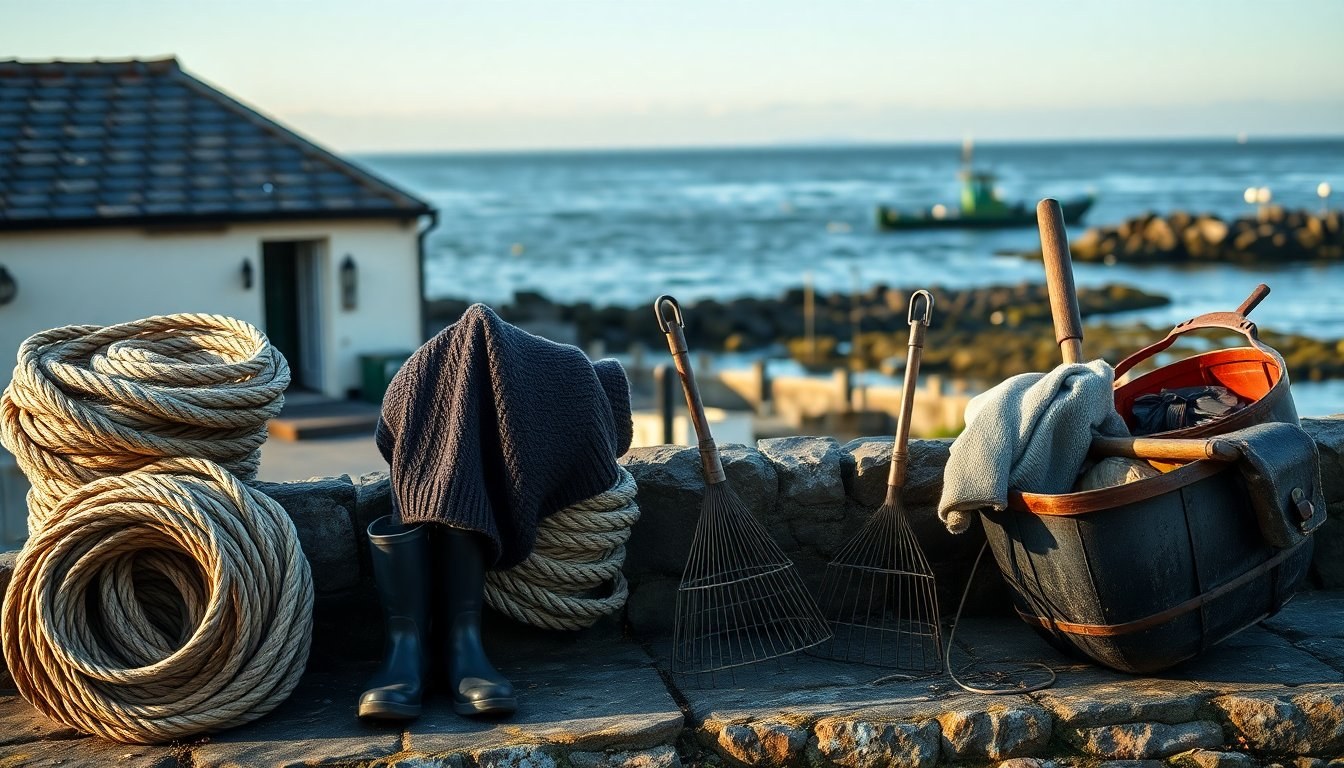
On the rugged shoreline of Finistère, near Logonna-Daoulas and a short drive from Brest, two partners have created a life rooted in tides, craft and community. Their home, known as Ty Jeanne, sits among stone and sea-sprayed lanes; it is both shelter and a base for daily work. Raised close to the water, one of them returned after studies in larger French cities to live where the surf and salt air are constant companions. The other moved from an urban background to learn marine trades and now spends long hours harvesting clams and selling directly to local kitchens.
The couple’s choices reflect a deliberate mixing of private life and public ties. One teaches physical activity through her initiative, Dousik sport santé, while the other navigates the tidal calendar for her catches. Together they run cultural gatherings and fundraising events for regional queer causes. Their story is less about leaving the world behind and more about remaking it: a chosen family, cooperative work rhythms and an active role in building a local queer scene on the Breton coast.
Living with the tide: rhythms and routines
Daily life is governed by predictable but demanding natural cues. The shellfish harvester rises to match the sea, working from a board with a rake to glean clams from the muddy flats. She describes a solitary satisfaction in those hours; podcasts and the latest albums keep company as the weather sculpts the landscape. In this work, which sits under the broad heading of shellfish farming and small-scale fisheries, the elements are both employer and clock. After a day on the ebb, the produce is taken straight to local restaurateurs, reinforcing an economic loop in the community that values traceability and seasonal labor.
Her partner found a way to fuse professional training with local needs. After studying sport in Strasbourg and Nantes, she created a structure to bring movement and rehabilitation exercises into care settings. She also leads sessions of longe-côte, a coastal walking practice that draws participants into the shallow sea for healthful immersion. The word longe-côte (sea walking) is used here to describe a practice that blends physical therapy, social exercise and a connection to place — an activity that attracts a varied local clientele and ties the couple to broader networks of health and leisure on the coast.
Workplaces, identities and local craft
The couple share a practical, hands-on approach to life: nautical training, oyster cultivation experience and a willingness to learn trades traditionally dominated by men. One of them trained in mariner skills and oyster work before specializing in clam fishing, a physically demanding craft that required adapting city-born habits to the rigors of the estuary. The other moved away from the family business to build an independent path. Together they interweave professional identities — conchyliculture, small business and therapeutic sport — into a household model where independence and interdependence coexist.
From boots to workshops
Practical details are part of the romance: waterproof gear, repaired mopeds, and a shared affection for the region’s rhythms. Their stories of first meetings — a work overalls that caught an eye, a moped repair that sparked conversation — emphasize how everyday tasks became the starting point for a long-term partnership. They refurbished a seaside home and named it with affection; in performing routine maintenance and local commerce, they have built a social economy of favors, trades and mutual aid, where fishmongers, carpenters and local artisans are both friends and neighbors.
Seasonal markets and direct sales
Sales channels are local and immediate: harvested clams move from shore to restaurant without long supply chains, reinforcing a sustainable, small-scale model. This direct link supports local gastronomy and provides the couple with a stable income while cementing their role within the coastal economy. Their work exemplifies a growing interest in short value chains and in reclaiming the cultural value of artisan seafood.
Community building and plans for family
Beyond work, the couple has been active in creating a visible queer life in a rural setting that could easily be isolating. They host creative evenings blending music, performance and traditional dance, called playful events locally, and they direct proceeds to regional associations such as Les Détraqueers in Brest. Their gatherings are described as lively intersections where local queer people, friends from trades and newcomers meet. This network also includes initiatives like newly formed “lesbian cafes” started to welcome those coming out, including a relative newcomer named Patoche who recently chose to live openly.
Solidarity, activism and chosen family
The area’s queer scene is knitted together by mutual aid: neighbors help with repairs, colleagues share childcare ideas and friends support one another through medical and administrative processes. The couple plans their future family life in that same spirit. They are on a path toward PMA (medically assisted procreation) and expect to coordinate journeys with close friends who are following a similar route. Parenthood is imagined collectively: children raised with an extended, chosen family that includes other queer parents, artisans and neighbors who together embody the community that sustained them.
Conclusion
What emerges from their story is a portrait of quiet resilience: two women who refused an urban-only horizon and instead fashioned a life by the water that intertwines work, activism and intimacy. Their coastal home is both a workplace and a communal hub, an example of how rural regions can host vibrant queer life through solidarity, craft and persistent creativity. For them, the sea is not simply a backdrop but a partner in a lived commitment to community and to one another.


