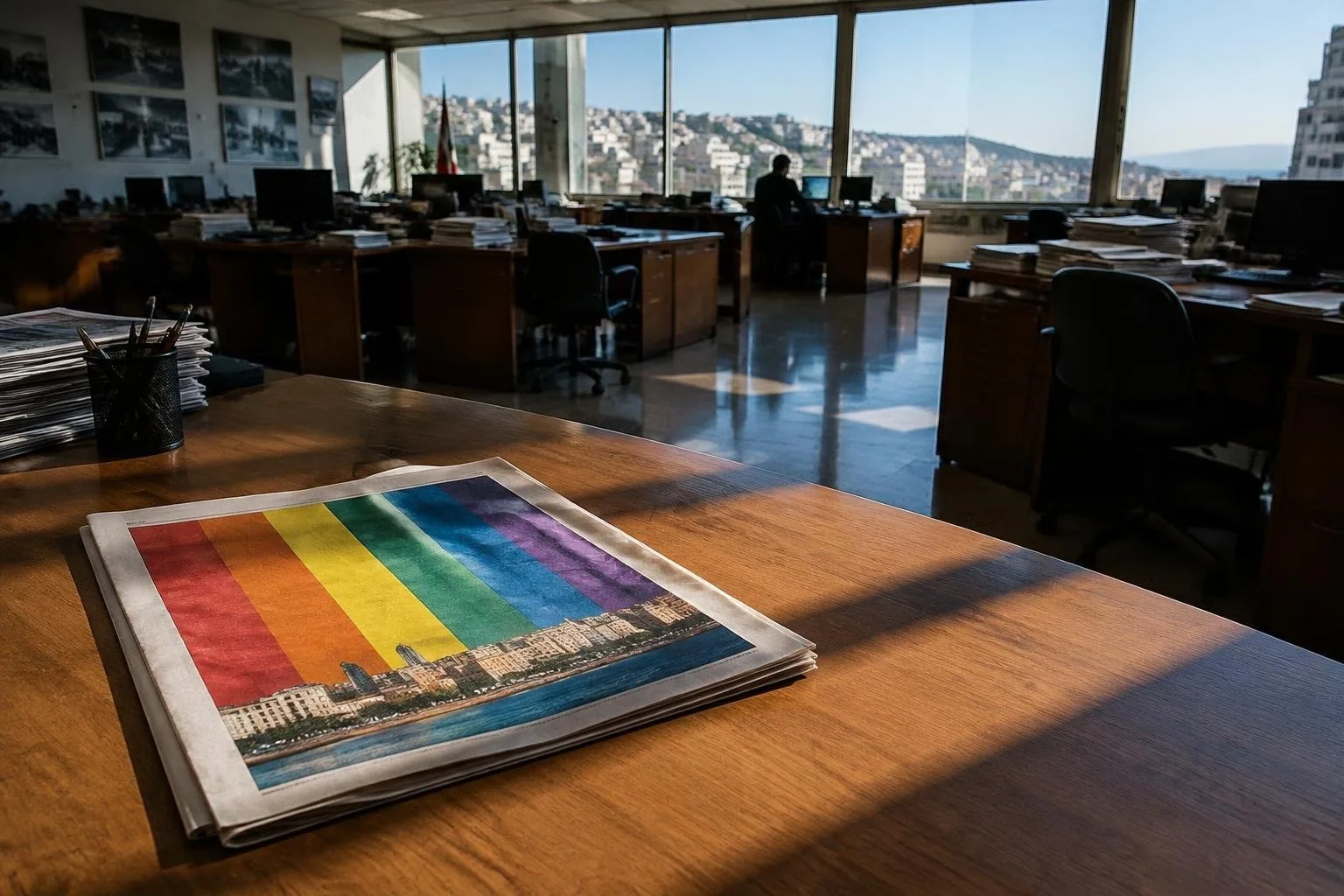
On 16 November 2026, coinciding with the International Day for Tolerance, the Lebanese daily An-Nahar published a special edition that served as a direct challenge to the country’s penal code. The front page featured six vertical panels, each colored according to a different political faction, including major groups like Hezbollah. Together, these strips formed a cohesive rainbow flag, a universal symbol of LGBTQ+ pride, repurposed here as a tool of political dissent.
The headline above the graphic read: “Article 534 Isn’t Natural.” This phrase targeted the specific section of the Lebanese Penal Code that has long been used to prosecute individuals for same-sex relationships. By merging the emblems and colors of opposing parties, the newspaper argued that the only true division in society is not between sects or ideologies, but between freedom and archaic legislation. The campaign was developed in partnership with the advertising agency IMPACT BBDO, aiming to shift public discourse from passive reporting to active advocacy.
The Colonial Legacy of Article 534
Article 534 dates back to 1943 and originates from the French colonial administration. It criminalizes “sexual intercourse contrary to the order of nature,” carrying a potential prison sentence of up to one year. While the text does not explicitly mention homosexuality, it has historically been wielded as a weapon against the LGBTQ+ community. The provision creates a legal framework where queer individuals are treated as second-class citizens, vulnerable to discrimination from employers, landlords, and even neighbors.
Despite several court rulings since 2007 rejecting the application of this article to consensual adult relationships, the law remains technically in force. A 2023 Human Rights Watch report highlighted that security forces continue to target LGBTQ+ people on digital platforms such as Grindr and Facebook. The persistence of this statute allows for raids on gatherings and exposes individuals to blackmail and violence, often preventing them from seeking justice due to fear of self-incrimination.
A Call for Legislative Repeal
Nayla Tueni, Editor-in-Chief of An-Nahar, stated that for 83 years, the law had put people on trial. She declared that the newspaper intended to reverse this dynamic: “Today, An-Nahar puts the law on trial.” Tueni emphasized that media should not merely reflect societal divisions but offer pathways out of them. “Our colors divided us. Love can bring us together,” she noted, framing the initiative as a voice for all Lebanese who refuse to be silenced by stigma.
Joe Abou Khaled, Regional Executive Creative Director at MENA IMPACT BBDO, described the project as creativity stepping into the fabric of politics. He argued that big ideas have the power to change behavior and how people live and love. The campaign also launched the hashtag #Abolish534 on social media, urging members of parliament to support repeal efforts.
Political Stalemate and Public Sentiment
Efforts to remove Article 534 from the penal code have stalled repeatedly. In July 2023, nine MPs submitted a proposal for repeal, but it never reached parliamentary committees. Adib Abdel Massih, one of the original signatories, withdrew his support amid intense pressure from religious and political figures. While parties like the Free Patriotic Movement and Lebanese Forces have shown varying degrees of openness, Hezbollah and the Amal Movement oppose changes on religious grounds. Conversely, another proposal introduced in 2023 sought to strengthen restrictions, indicating a polarized legislative environment.
The special edition included personal stories from LGBTQ+ individuals, detailing experiences of harassment and exclusion. These narratives underscored the human cost of the law, contrasting sharply with the abstract debates in parliament. By displaying the front page prominently through outdoor advertising and digital channels, An-Nahar ensured the message could not be ignored, even in a climate where displaying Pride symbols carries legal risks.