
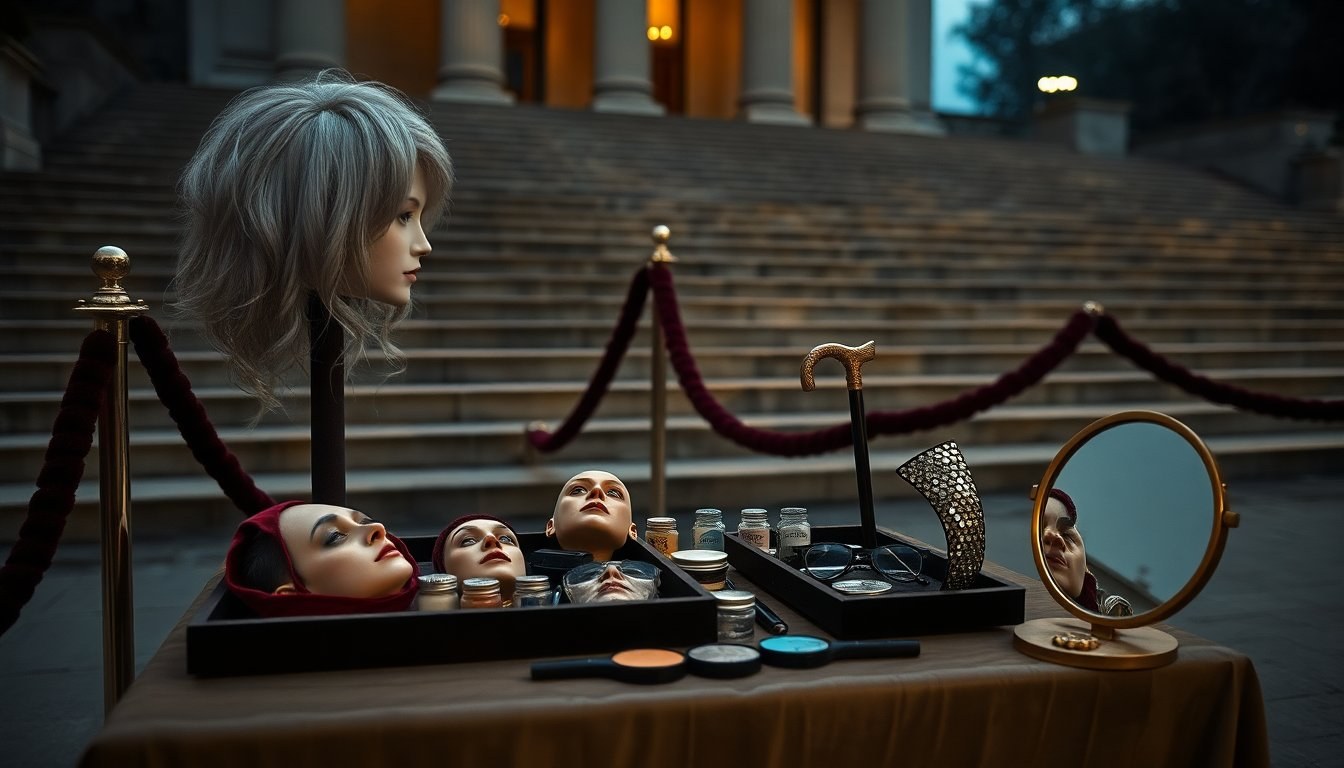
The carpet outside the Metropolitan Museum of Art on May 04, 2026 welcomed a performance rather than a conventional red-carpet outfit when Bad Bunny stepped into the spotlight. The 32-year-old Puerto Rican artist, born Benito Antonio Martínez Ocasio, chose to present himself as a much older man: snow-gray hair, a salt-and-pepper beard, and painstakingly applied prosthetics that altered his face and hands. This deliberate choice directly engaged with the Costume Institute’s exhibition theme, Costume Art, and its interest in the aging body as a subject that fashion often sidelines.
The arrival was both sartorial statement and theatrical exercise. Rather than a simple tuxedo, Bad Bunny arrived as a character—stooping slightly with a black cane and adopting the measured gait of a man many decades older. The look asked viewers to consider how garments and appearance perform identity over time. By foregrounding the physical signs of aging, the artist turned a glamorous evening into a conversation about representation, time, and the roles costume can create and critique within cultural moments like the Met Gala 2026.
The prosthetic transformation
The central element of the presentation was the prosthetic work crafted by acclaimed makeup artist Mike Marino. Marino, known for dramatic character makeups, collaborated closely with Bad Bunny to hand-sculpt wrinkles, sagging skin, and sun spots that extended onto the hands and neck. The result was an image of hyper-real aging designed to read clearly in photographs and from a distance. Marino’s approach emphasized texture and anatomical changes rather than caricature; every crease and pigment mark was placed after discussions about how time could reshape specific features of the singer’s face and body.
Observers noted the transformation’s subtle craftsmanship: the application mimicked natural skin movement and placed age markers in believable locations. Marino’s résumé includes high-profile theatrical transformations, and his experience with prosthetic realism contributed to an effect that made Bad Bunny momentarily unrecognizable except for the eyes. That level of detail helped the presentation function as both makeup achievement and performance art, aligning technical skill with the evening’s museum-centered dialogue.
Styling choices and historical reference
Alongside the prosthetics, the clothing completed the narrative. Bad Bunny wore a custom all-black tuxedo developed in collaboration with Zara, featuring an oversized bow at the throat. The neckpiece intentionally referenced Charles James’s 1947 gown “Bustle“, a historic object from the Costume Institute’s holdings. Accessories—the black cane, a classic timepiece, and the measured way he used the cane ascending the museum steps—reinforced the character-driven presentation and connected a single outfit to decades of tailoring and costume history.
Design intention and performance
The ensemble functioned as more than a costume: it was a curated dialogue between contemporary street-to-runway design and archival couture. By collaborating with a high-street brand on a custom piece, Bad Bunny highlighted how references to historic garments can be reinterpreted in the present. The use of the cane as a walking prop signaled commitment to the role and underscored how fashion can create narrative gestures that extend beyond fabric and silhouette into embodied performance.
Reaction and cultural impact
Reaction to the transformation was swift on social platforms and in the fashion press. Viewers praised the realism and theatricality, pointing out small details such as age spots on his hands and the measured performance up the museum steps. Some commenters called the effort cinematic in scope and commended both the artist and the makeup team for executing a complete character. On the carpet, Bad Bunny quipped that the application took “53 years”—a playful remark about the many hours behind the finished effect that also underscored the performative nature of the evening.
Broader conversations
Beyond applause and astonishment, the look reopened a conversation about how the fashion industry treats older bodies. The Costume Institute exhibition intentionally spotlights the aging body as an object of artistic and sartorial inquiry, and Bad Bunny’s choice turned a glamorous, youth-focused event into a platform for that discussion. Known for unpredictable Met appearances—from dramatic trains to culturally resonant headwear—the artist used this moment to demonstrate how costume, prosthetics, and tailoring can be combined to interrogate assumptions about age, identity, and spectacle.
In sum, the Met Gala appearance functioned as an intersection of makeup artistry, fashion history, and performative identity. By becoming an elderly persona for the night, Bad Bunny invited audiences to look twice at the meanings embedded in clothing and appearance and to consider how museums and pop culture can prompt new reflections on aging in fashion.


