
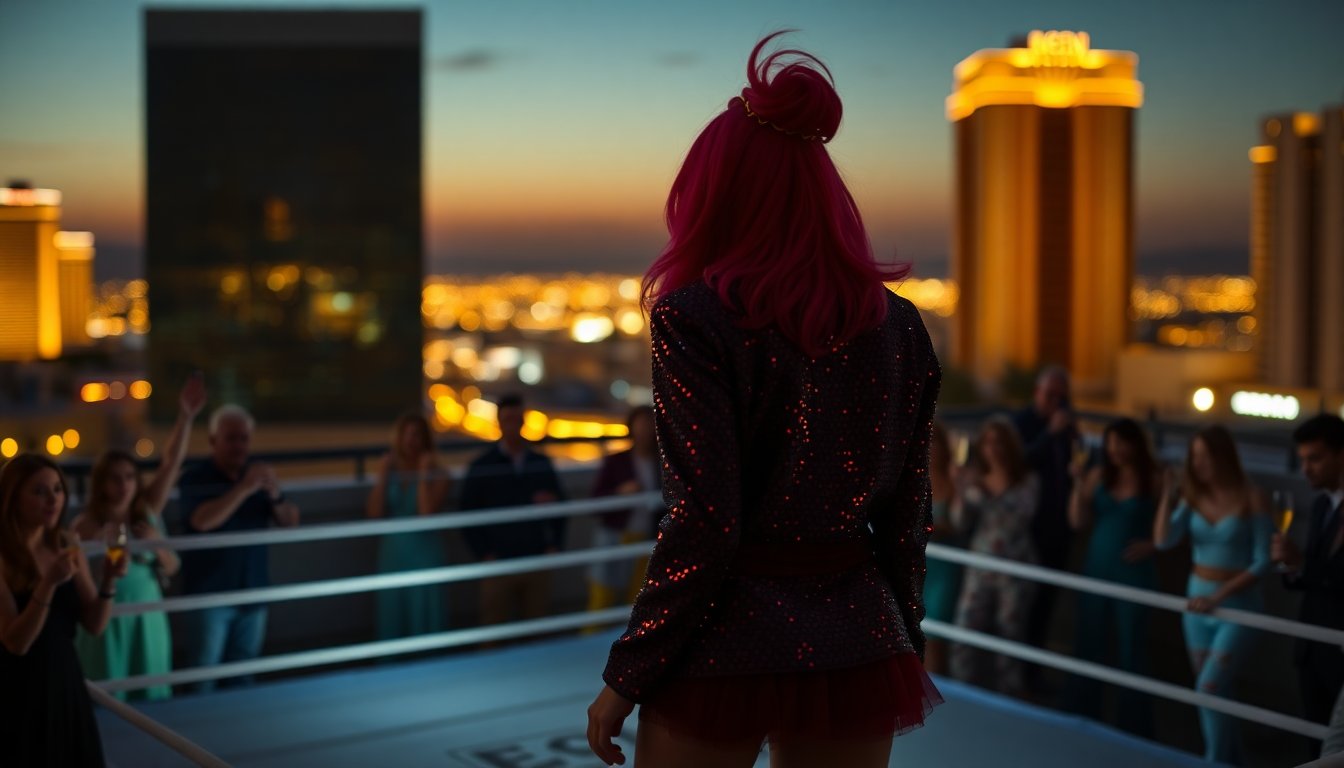
The wrestling world paused as Kidd Bandit stepped out of the ring in visible emotion after what many are calling her last matches for the foreseeable future. Known for an anime-inspired persona and a high-energy style, Bandit has been a prominent voice on the independent wrestling circuit and within queer performance communities. In an X post dated April 18 she signaled a change in direction with the message: “That’s all folks! Thanks for tuning in.” That hint prefaced a series of final in-ring appearances during WrestleMania week in Las Vegas.
The farewell culminated at EFFY’s Big Gay Brunch 11, an event that fuses drag sensibility and indie wrestling spectacle around WrestleMania. At the show Bandit competed in a Femme Fatale four-way match against Steph De Lander, Charli Evans and Allie Katch. Fans chanted “Thank You, Bandit” as the bell rang, turning the bout into more than a sporting contest: it became a communal send-off for a performer who helped shape queer wrestling culture. The scene underscored the crossover between performance art and athletic competition that Big Gay Brunch celebrates.
The match and its final sequence
Inside the ring Bandit fought alongside and against longtime peers, trading near-falls and momentum shifts with a crowd emotionally invested in the outcome. The match reached its decisive moment when Allie Katch connected with a Heatseeker piledriver to score the pin. The move—well-known on the independent scene—closed the bout, and in the immediate aftermath the dynamics shifted from rivalry to tenderness. Katch embraced Bandit and the pair exchanged words, a gesture that framed the ending as both competitive and compassionate. Fans watched as Bandit removed her kickpads and left them in the center of the ring: a simple action heavy with symbolism.
Symbols and ritual in a goodbye
The act of leaving gear in the ring carried emotional weight for attendees. In wrestling lore, dropping equipment or leaving shoes behind often functions as a symbolic retirement—a public way to mark a transition in a performer’s life and career. For Bandit, the gesture resonated across the audience; many chanted while she wiped away tears, taking a long last look at the crowd. She later reflected on the moment on X, writing: “Lost most of my matches. Won everyone’s hearts. Thank you. I already miss everyone.” That post reinforced the sense that this was more than a one-night spectacle—it was a chapter closing.
Career arc and community impact
Bandit’s trajectory climbed from novelty to substantive influence as she moved through outlets and continents, bringing visibility to trans performers in a landscape that has not always been welcoming. Early attention to her aesthetic and moves turned into recognition: awards such as QWI’s 2026 Rookie of the Year and later honors in 2026 signaled critical acknowledgment of both her in-ring work and cultural presence. Beyond accolades, Bandit became an outspoken advocate for trans inclusion, using interviews and social platforms to discuss safety and belonging for transgender people in sport and performance.
T4T Wrestling and future directions
During her career Bandit publicly transitioned, a process that included a period away from competition between 2026 and 2026. Emerging from that hiatus, she launched T4T Wrestling, a brand intended to be a creative and athletic platform for trans and nonbinary performers. The initiative aims to combine wrestling with other art forms and to create environments where gender-diverse athletes can express themselves safely and visibly. While Bandit’s in-ring future is uncertain, her organizational work and advocacy suggest her influence will continue off the mat.
For many fans and peers the evening at Big Gay Brunch 11 was both an ending and a promise: an ending of Bandit’s regular appearances as a competitor and a promise that her voice and projects will remain part of the wrestling community. The reception she received—chants, embraces, and tears—underscored the bond she forged with audiences. As the scene digests this likely farewell, conversations about representation, community spaces, and the evolving nature of performance wrestling continue, shaped in part by the path Bandit has helped carve.


