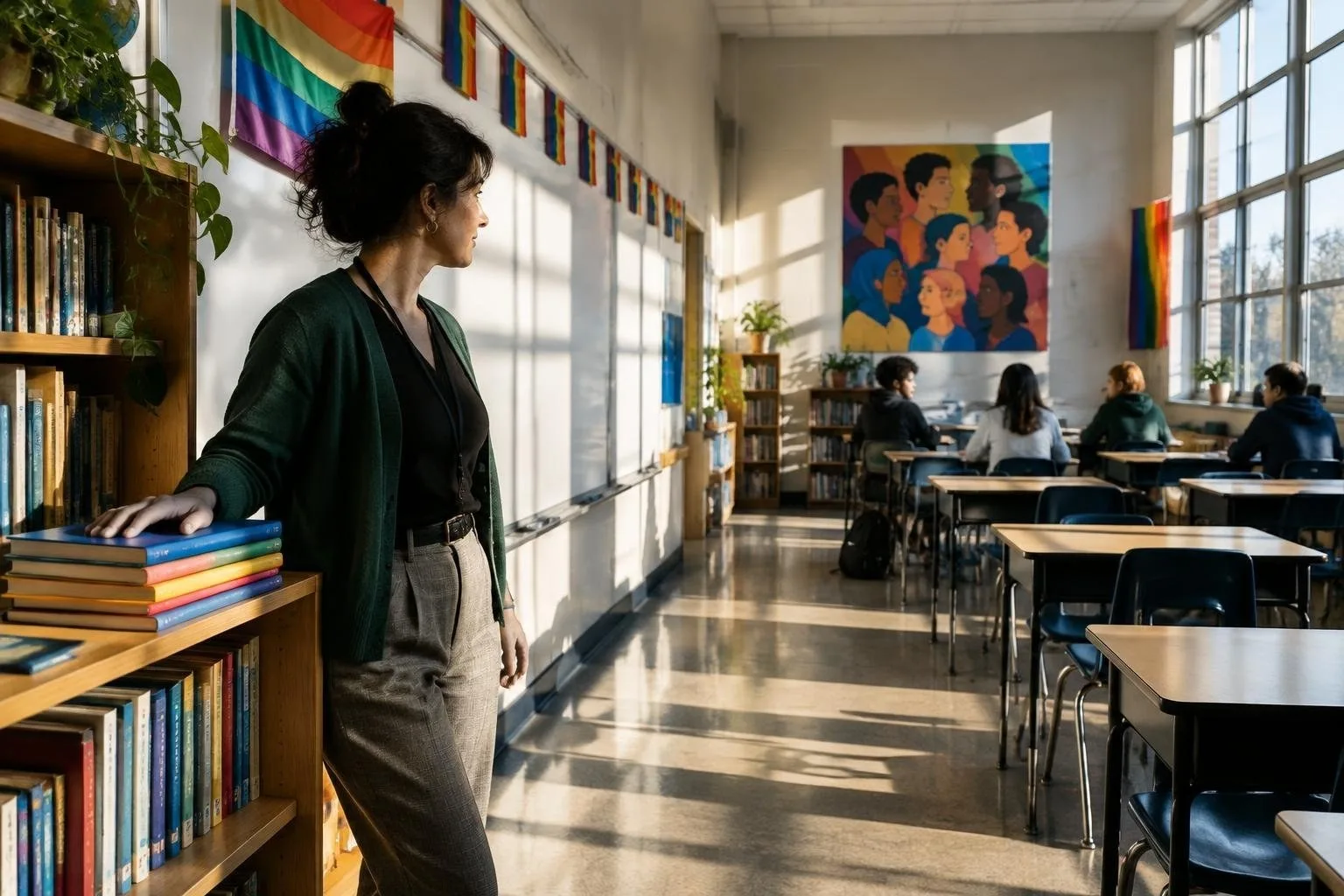
Every young person deserves to see themselves, their family, and the full diversity of our world reflected in their curriculum. This includes teaching about LGBTQ+ identities and issues. While huge strides have been made towards LGBTQ+ equality in recent decades, anti-LGBT bullying and language unfortunately remain commonplace in Britain’s schools.
Relationships and Sex Education
In April 2019, the UK Government announced new regulations for teaching Relationships and Sex Education in England. These regulations marked a significant change in the way children and young people are taught about LGBTQ+ relationships and identities. The guidelines cover important issues like consent and online safety, alongside LGBTQ+ identities and relationships.
For secondary schools, the guidance states that RSE must be taught in all schools in England, and sexual orientation and gender identity must be explored at a timely point. Same-sex relationships should be included within lessons discussing healthy and stable relationships. Schools should also take positive action to build a culture where everyday sexism, misogyny, homophobia, and gender stereotypes are not tolerated.
Supporting LGBTQ Students
Research has identified strategies to support LGBTQ and all students to be safe and thrive at school. These include policies that specifically identify or enumerate protected groups such as LGBTQ students, professional development for educators, access to information and support related to sexual orientation and gender identity or expression, and the presence of student-led clubs or organizations such as gender-sexuality alliances.
Additionally, schools can take steps to create a safe and inclusive environment by teaching about different family types, including LGBTQ+ families, and by promoting respect and equality for all students. Schools can also provide resources and support for LGBTQ students, such as counseling services and support groups.
Creating a Safe and Inclusive Environment
To create a safe and inclusive environment, schools can take several steps. First, they can develop and implement policies that specifically protect LGBTQ students from bullying and discrimination. Second, they can provide professional development for educators and other school personnel on LGBTQ issues. Third, they can create student-led clubs or organizations, such as GSAs, to provide support and resources for LGBTQ students.
Finally, schools can work to promote respect and equality for all students, regardless of their sexual orientation or gender identity. This can be done by teaching about different family types, including LGBTQ+ families, and by promoting diversity and inclusion in all aspects of school life.